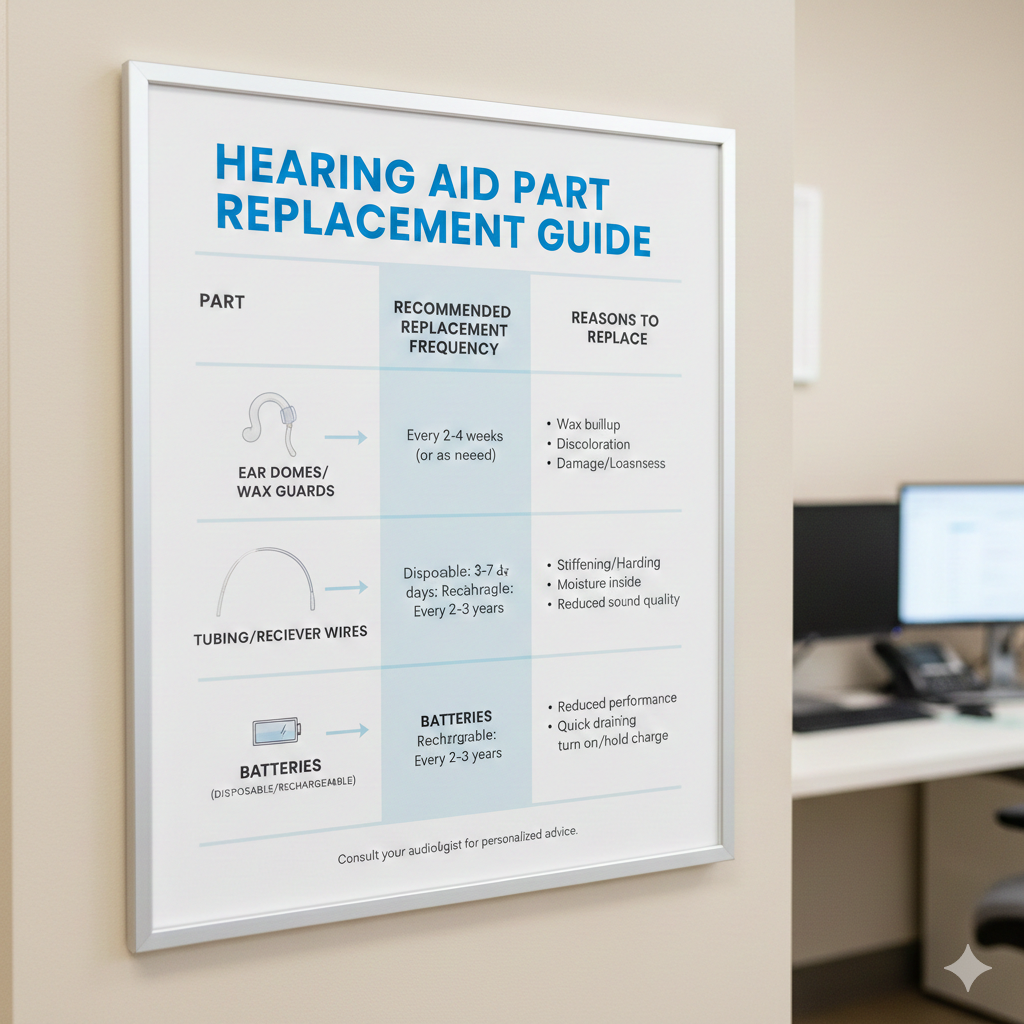
Introduction — Why this matters now
Replace hearing aid parts before assuming poor sound or device failure means your hearing aids are dying. Most issues blamed on “bad sound” are caused by worn components—not broken electronics. Domes harden, wax guards clog, receivers weaken, and batteries degrade long before the hearing aid itself reaches the end of its usable life.
Because these parts are small and inexpensive, they’re easy to overlook—until clarity drops or feedback begins. This guide provides a realistic replacement timeline, explains why each part wears out, shows early warning signs you’re overdue, and explains how routine replacements can extend your hearing aids’ lifespan by years.
The 40-Second Answer
Most hearing aid parts need regular replacement: domes every 1–3 months, wax guards every 1–2 months, receivers every 12–24 months, and batteries as they degrade. Replacing parts on time prevents sound loss, feedback, and unnecessary repairs.
Why Hearing Aid Parts Wear Out Faster Than the Device
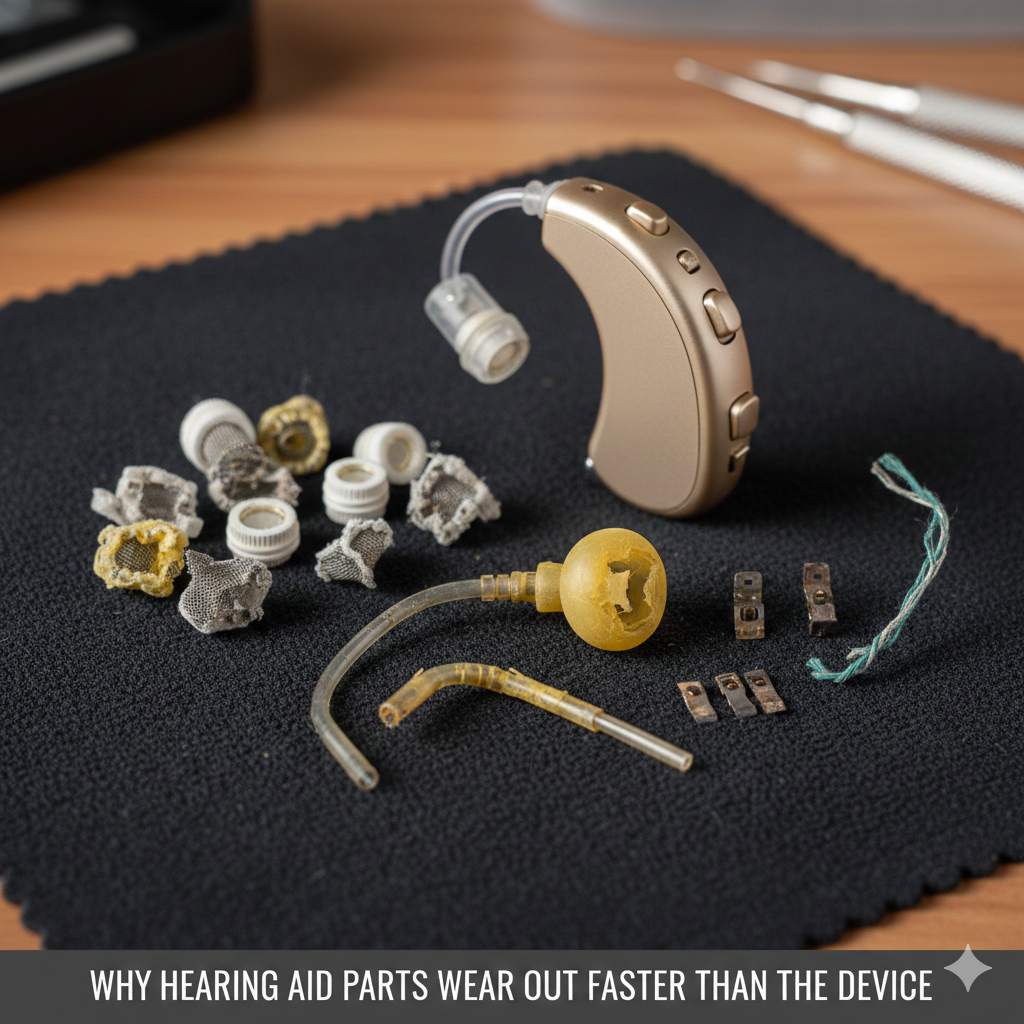
Hearing aids live in a harsh environment:
Warmth + humidity
Earwax and skin oils
Daily insertion and removal
Electronics are sealed—but consumable parts take the hit. Treating them as disposable is the secret to long-term reliability.
[Expert Warning]
Waiting until sound drops usually means the part has been failing for weeks already.
The Replacement Timeline (Quick Overview)
| Part | Typical Replacement | Why |
| Domes | 1–3 months | Harden, lose seal |
| Wax guards | 1–2 months | Clog with wax |
| Receivers | 12–24 months | Moisture + strain |
| Tubing (BTE) | 3–6 months | Stiffens, cracks |
| Batteries (disposable) | As used | Capacity loss |
| Rechargeable battery | 2–4 years | Charge degradation |
Domes: Small Part, Big Impact
When to replace
Every 1–3 months
Sooner if they feel stiff or discolored
Signs you’re overdue
Whistling or feedback
Poor fit or slipping
Sudden clarity loss
[Pro-Tip]
Soft, flexible domes seal better—once they harden, sound quality drops fast.
Wax Guards: The Most Ignored Part
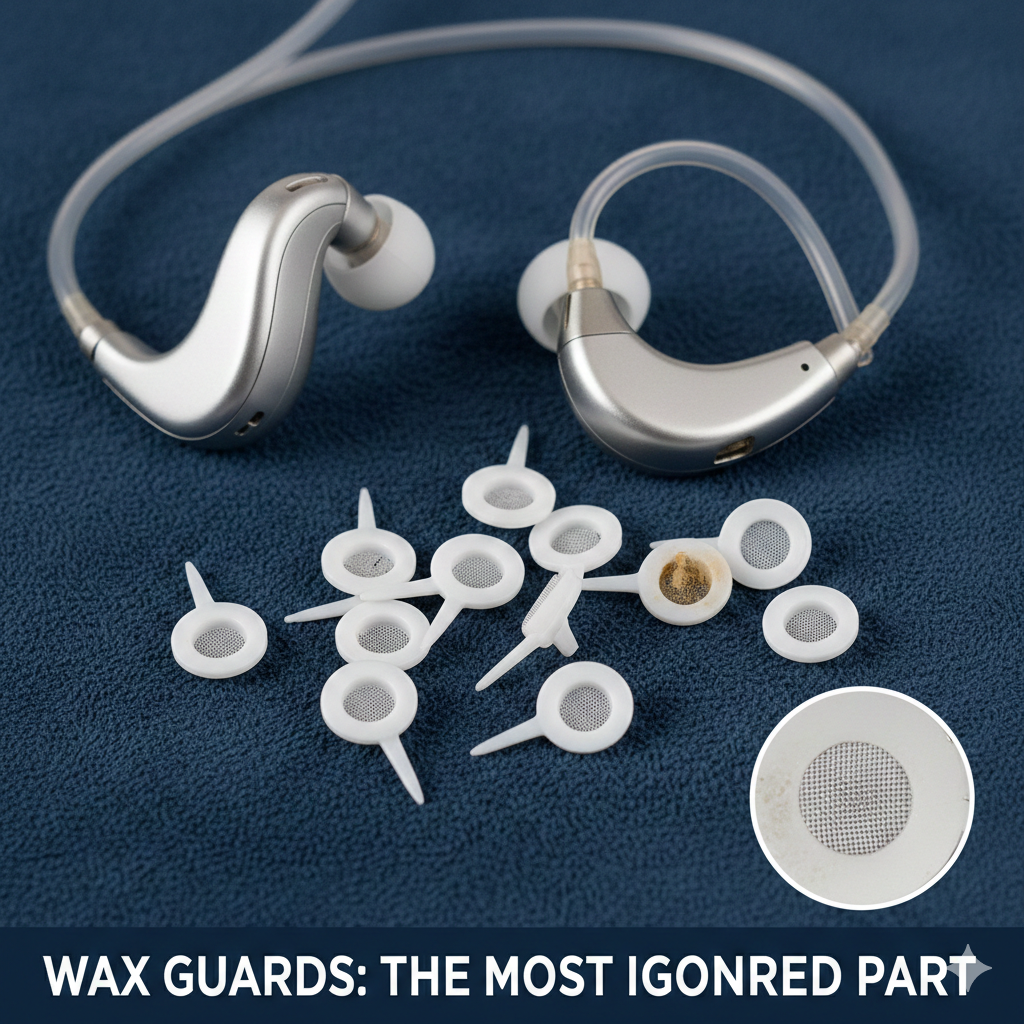
When to replace
Every 4–8 weeks
Immediately if sound becomes muffled
Why they matter
Wax guards are designed to clog instead of your receiver. They’re sacrificial—and cheap.
[Money-Saving Recommendation]
Replacing wax guards regularly is far cheaper than replacing a receiver.
Receivers: Durable, But Not Permanent
When to replace
Usually every 12–24 months
Earlier with heavy sweat or humidity exposure
Warning signs
Sound cutting in and out
Distortion at certain volumes
One side sounding weaker
Receivers are replaceable on many RIC devices without replacing the entire hearing aid.
Tubing (BTE Hearing Aids): Don’t Let It Harden
When to replace
Every 3–6 months
What happens if you don’t
Sound leaks
Reduced amplification
Increased feedback
Tubing stiffness is gradual—most people don’t notice until performance drops.
Batteries: Disposab le vs Rechargeable
Disposable batteries
Replace when sound weakens or dies
Expect shorter life over time
Rechargeable batteries
Capacity fades after 2–4 years
Signs include not lasting a full day
[Expert Warning]
Charging twice a day is a sign of battery aging—not normal use.
Common Replacement Mistakes (and Fixes)
Mistake #1: Replacing parts only after failure
Fix: Replace preventively on schedule.
Mistake #2: Mixing old and new parts
Fix: Replace both sides together when possible.
Mistake #3: Ignoring fit changes
Fix: If feedback starts, check domes before adjusting settings.
Information Gain: Replacement Prevents “False Hearing Loss”
Top SERP articles don’t mention false decline.
From real-world patterns:
Worn domes mimic worsening hearing
Clogged guards reduce high frequencies first
Users think their hearing got worse—when parts simply aged
Replacing parts often restores clarity immediately.
Unique Section — Beginner Mistake Most People Make
Assuming hearing aids should sound the same forever.
Sound changes often come from physical wear—not hearing changes. Regular part replacement keeps sound consistent.
Replacement Schedule You Can Actually Follow
| Task | Reminder |
| Dome swap | Every 2 months |
| Wax guard change | Monthly |
| Receiver check | Yearly |
| Tubing replacement | 4–6 months |
| Battery health check | Annually |
Set calendar reminders—it works.
Internal Linking (Contextual)
“daily cleaning routines” → How to Clean Hearing Aids Properly
“moisture damage prevention” → Are Hearing Aids Waterproof?
“repair vs replace decisions” → Cheapest Hearing Aids That Still Perform Reliably
Watch & Learn (YouTube — contextual)
“How to change hearing aid domes and wax guards”
“When to replace hearing aid receivers”
(Embed after the wax guard section.)
Image & Infographic Suggestions
Infographic: “Hearing Aid Parts Replacement Timeline”
Alt: how often replace hearing aid parts
Diagram: “Worn vs New Dome Seal”
Alt: hearing aid dome replacement
Visual: “Wax Guard Before and After”
Alt: hearing aid wax guard clogged
FAQs
How often should hearing aid domes be replaced?
Typically every 1–3 months.
When should wax guards be changed?
About every 4–8 weeks, or sooner if sound muffles.
Do receivers wear out?
Yes—usually after 1–2 years.
Can old parts make hearing seem worse?
Yes—worn parts often mimic hearing decline.
Is replacing parts expensive?
No—most parts are inexpensive and prevent bigger costs.
Conclusion
Replacing hearing aid parts on time is one of the easiest ways to protect sound quality, comfort, and device lifespan. These small components are designed to wear out so the electronics don’t. Treat replacement as routine maintenance—not a repair—and your hearing aids will perform consistently year after year.
Internal link
How to Clean Hearing Aids Properly (Step-by-Step)
External link