Introduction — Why this matters now
Store Hearing Aids Safely: How Proper Storage Extends Their Life
Store hearing aids safely to avoid the quiet damage that shortens their lifespan more than most people realize. Devices left on bathroom counters, tossed into pockets, or forgotten in hot cars absorb moisture, collect debris, and get damaged or lost—often without immediate warning signs.
Because hearing aids are worn all day, storage habits feel minor. In reality, what you do between wearing sessions determines long-term reliability. This guide explains safe daily storage, travel storage, and the most common mistakes to avoid—so your hearing aids last years, not months.
The 40-Second Answer
Store hearing aids safely by powering them off, keeping them dry overnight, and placing them in a protective case away from heat, moisture, and pets. Use a drying case at home and a hard case when traveling.
The Golden Rules of Hearing Aid Storage
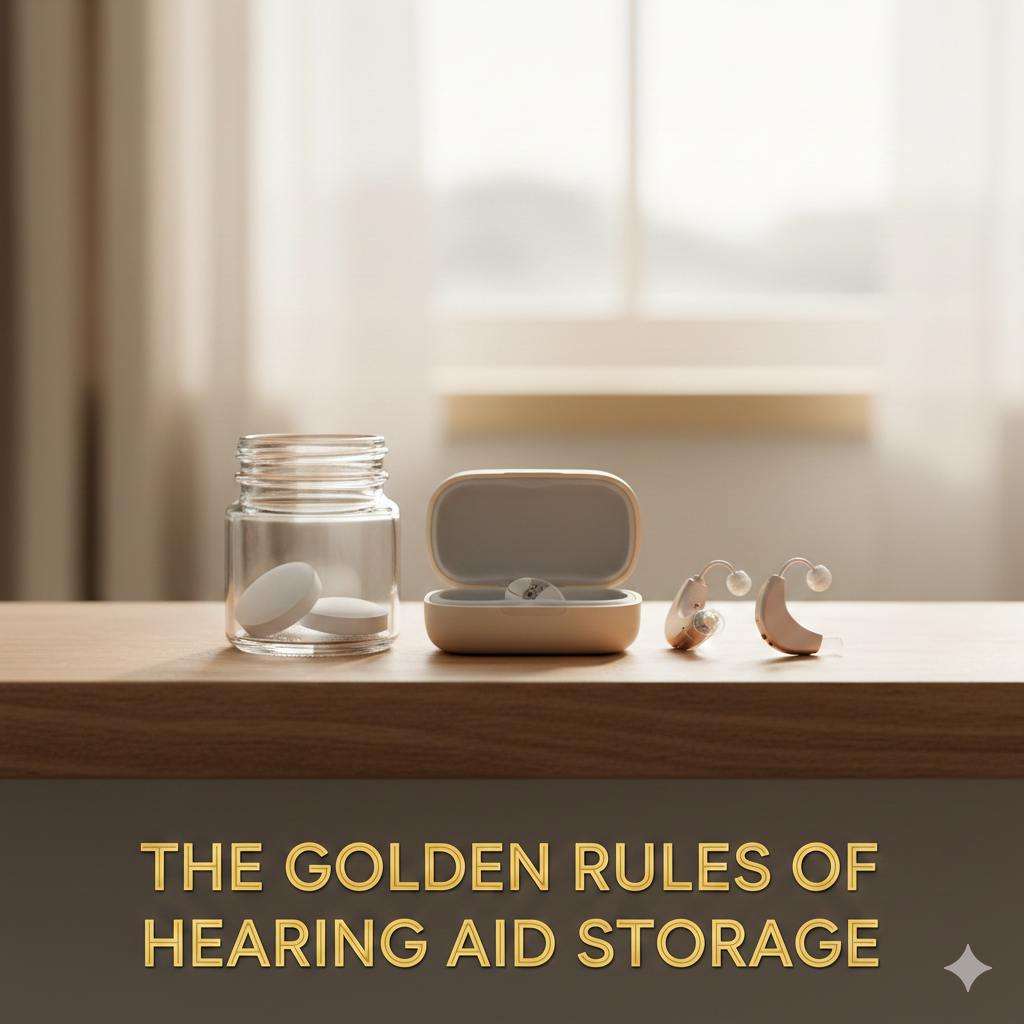
Dry beats fancy — moisture control matters more than brand-name cases
Consistent location — same spot every night prevents loss
Protected, not exposed — counters invite accidents
[Expert Warning]
Bathrooms are the worst storage location due to steam—even when devices aren’t near water.
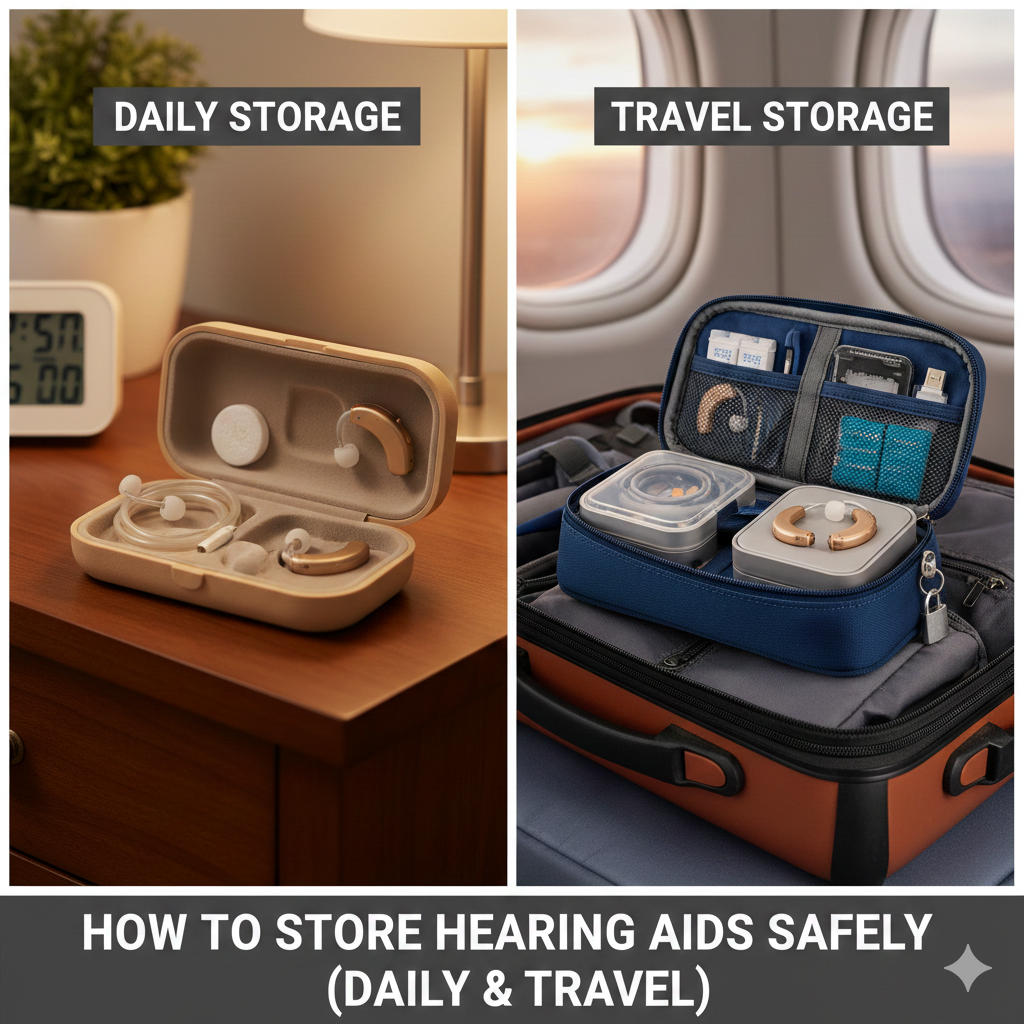
Daily Storage: What to Do Every Night
Step 1: Power off or open battery door
This prevents battery drain and allows airflow.
Step 2: Light wipe before storage
Remove sweat and skin oils with a dry cloth.
Step 3: Use a drying solution
Drying case (best)
Dehumidifier jar (good)
Step 4: Store in a protected spot
Nightstand drawer or shelf—not the open counter.
[Pro-Tip]
Put your hearing aid case next to something you always touch before bed (phone charger, glasses).
Storage by Hearing Aid Type
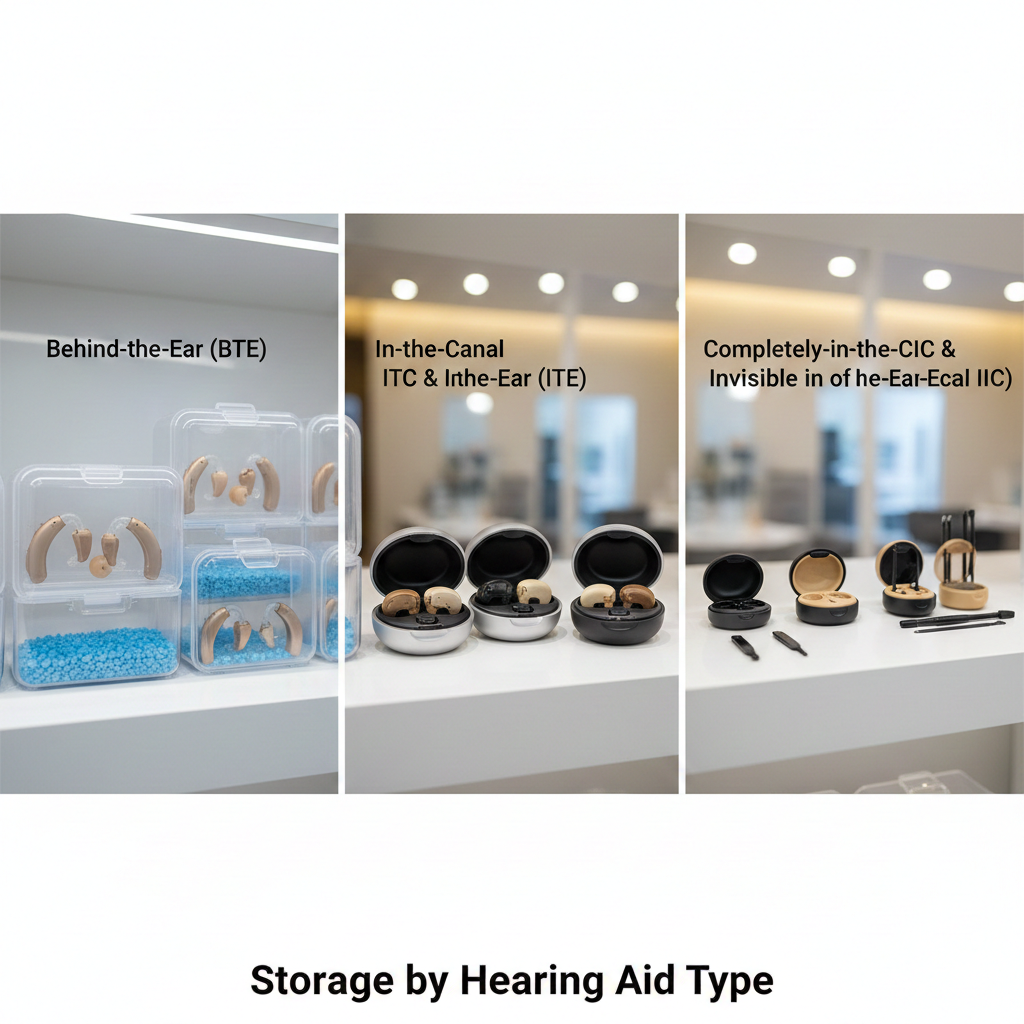
Rechargeable hearing aids
Store in the charging dock overnight
Keep charger away from humidity
Avoid extension cords near sinks
Disposable-battery hearing aids
Open battery doors during storage
Remove batteries if not used for days
Travel Storage: Protecting Hearing Aids on the Go
Use the right case
Hard-shell case for bags
Water-resistant zip case for pockets
During flights
Keep aids in carry-on, never checked luggage
Pressure changes don’t harm aids—but temperature extremes do
Hotels & unfamiliar spaces
Avoid bathroom counters
Use the same storage habit as home
[Money-Saving Recommendation]
A $10 travel case can prevent a $1,500 replacement.
Common Storage Mistakes (and Better Alternatives)
Mistake #1: Leaving aids “just for a minute”
Fix: Always return them to the case—even briefly.
Mistake #2: Storing near heat sources
Fix: Keep away from heaters, sunlight, dashboards.
Mistake #3: Pocket or purse storage without a case
Fix: Use a small protective case every time.
Information Gain: Why Heat Is More Dangerous Than Drops
Most guides focus on dropping hearing aids. In reality, heat damage is more common and more subtle.
From real-world patterns:
Heat degrades seals and batteries
Damage appears weeks later as instability
Users blame “defects” when storage caused it
Avoid hot cars and windowsills at all costs.
Unique Section — Beginner Mistake Most People Make
Storing hearing aids near pets.
Dogs frequently chew hearing aids due to earwax scent. Always store devices in closed cases, elevated off the floor.
Safe Storage Checklist (Quick Table)
| Situation | Safe Storage Choice |
| Overnight | Drying case or charger |
| Gym | Hard case in bag |
| Travel | Hard-shell case |
| Hotel | Drawer, not bathroom |
| Long-term | Battery removed + dry |
Internal Linking (Contextual)
“daily moisture control” → Are Hearing Aids Waterproof?
“cleaning before storage” → How to Clean Hearing Aids Properly
“fix issues caused by poor storage” → How to Fix Common Hearing Aid Problems at Home
Watch & Learn (YouTube — contextual)
“How to store hearing aids correctly”
“Travel tips for hearing aid users”
(Embed after the travel section.)
Image & Infographic Suggestions
Infographic: “Safe vs Unsafe Hearing Aid Storage”
Alt: how to store hearing aids safely
Diagram: “Moisture & Heat Risk Zones at Home”
Alt: hearing aid storage mistakes
Visual: “Travel Storage Essentials”
Alt: hearing aid travel case tips
FAQs
Should I store hearing aids in the bathroom?
No—humidity makes bathrooms unsafe.
Do I need a drying case?
It’s highly recommended, especially in humid climates.
Can hearing aids be stored in a car?
No—heat damages batteries and seals.
Should batteries be removed during storage?
Yes, if not used for several days.
What’s the safest place at night?
A drying case or charger in a dry room.
Conclusion
Safe hearing aid storage is about habits, not hardware. Powering off, drying overnight, and using a protective case prevents most moisture, heat, and loss-related failures. Store them the same way every time, and your hearing aids will stay reliable—whether you’re at home or on the road.
Internal link
How to Fix Common Hearing Aid Problems at Home
External link