Introduction — Why this matters now
BTE vs RIC vs ITE hearing aids differ far more in comfort, wearability, and daily usability than in raw sound quality. Choosing the wrong style is one of the most common reasons people abandon hearing aids—even when the technology itself is solid.
With OTC options expanding and clinics offering dozens of models, many buyers assume “smaller is better” or that one style fits all. In reality, factors like wearing glasses, mask use, ear shape, hand dexterity, and lifestyle often matter more than brand or price. This guide breaks down the real-life differences between BTE, RIC, and ITE hearing aids so you can match a style to how you actually live—not how ads make them look.
The 40-Second Answer
BTE, RIC, and ITE hearing aids mainly differ in where the electronics sit and how sound enters the ear. RIC offers the best balance of comfort and sound for most users, BTE suits durability and power needs, and ITE prioritizes discretion but can sacrifice comfort and maintenance ease.
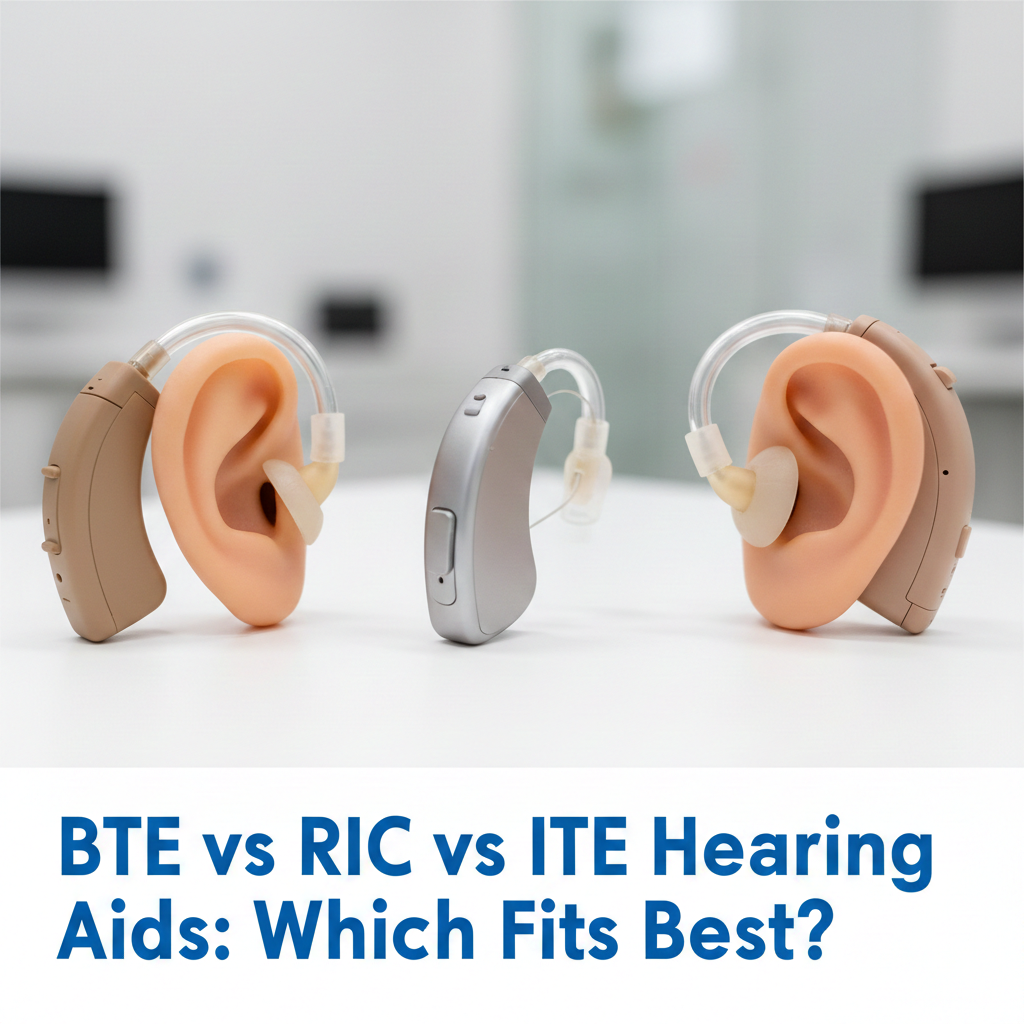
Quick Overview: What the Styles Mean
BTE (Behind-The-Ear): Device sits behind the ear; sound travels through a tube into the ear canal
RIC (Receiver-In-Canal): Small body behind ear; speaker sits inside ear canal
ITE (In-The-Ear): Entire device fits inside the ear
Each design changes airflow, comfort, cleaning needs, and how “natural” sound feels.
How Sound Delivery Differs by Style
BTE: Stable and Powerful
Sound travels through a tube, which can slightly alter natural resonance—but offers reliability and strength.
RIC: Direct and Open
Placing the receiver in the canal allows more natural sound and less “plugged” feeling.
ITE: Compact but Sealed
All components inside the ear can increase occlusion (that echoey feeling), especially for new users.
[Expert Warning]
Smaller hearing aids are not automatically more comfortable. Occlusion and airflow matter more than size.
Comfort & Wearability in Daily Life
Glasses, Masks, and Headwear
BTE: Can crowd the ear with glasses or masks
RIC: Light and flexible—often easiest with glasses
ITE: No interference behind the ear
Long Wear (8–12 hours)
RIC devices typically cause less ear fatigue due to open-fit domes.
Common Mistakes (and How to Fix Them)

Mistake #1: Choosing the smallest option
Fix: Choose the style that matches ear anatomy and airflow needs.
Mistake #2: Ignoring dexterity
Fix: If handling tiny batteries or domes is difficult, avoid deep-canal ITE models.
Mistake #3: Overvaluing invisibility
Fix: Comfort and clarity beat discretion—most people won’t notice your aids anyway.
[Pro-Tip]
If you’ve never worn hearing aids, RIC is usually the easiest adjustment path.
Information Gain: Ear Fatigue Is the Hidden Deal-Breaker
Top comparison pages rarely discuss ear fatigue—the soreness, pressure, or “fullness” that builds over hours.
From real-world use:
ITE devices can trap moisture and pressure
BTE tubing can pull or rub after long days
RIC open-fit designs reduce fatigue for most mild–moderate losses
This single factor explains many “the sound is fine but I stopped wearing them” stories.
Unique Section — Real-World Scenarios
Scenario 1: Office Worker (Calls + Meetings)
Best fit: RIC
Why: Natural sound, easy streaming, minimal fatigue
Scenario 2: Outdoor Worker (Sweat + Movement)
Best fit: BTE
Why: Durable housing, better moisture resistance
Scenario 3: Social User Wanting Discretion
Best fit: ITE
Why: Hidden design—if comfort is acceptable
Sound Quality Myths vs Reality
Myth: BTE sounds less clear
Reality: Modern processing minimizes differences
Myth: ITE sounds more “natural”
Reality: Occlusion can distort perception
Myth: RIC is fragile
Reality: Receiver replacement is simple and common
Maintenance & Cleaning Differences
| Style | Cleaning Ease | Moisture Risk | Repair Simplicity |
| BTE | Easy | Low | High |
| RIC | Moderate | Medium | High (receiver swap) |
| ITE | Harder | High | Medium |
[Money-Saving Recommendation]
RIC receivers are replaceable without replacing the entire device—often cheaper long term.
Internal Linking (Contextual)
“how sound processing works inside devices” → How Hearing Aids Work
“comfort issues tied to early loss” → Hearing Aids for Mild Hearing Loss
“daily care routines by style” → How to Clean Hearing Aids Properly
Watch & Learn (YouTube — contextual)
“BTE vs RIC vs ITE hearing aids explained visually”
“Why open-fit hearing aids feel more natural”
(Embed after the comfort section.)
Image & Infographic Suggestions (1200×628 px)
Comparison Graphic: “BTE vs RIC vs ITE at a Glance”
Alt: BTE vs RIC vs ITE hearing aids comparison
Illustration: “Sound Path Differences by Style”
Alt: hearing aid sound delivery styles
Visual: “Comfort Over 10 Hours Wear Test”
Alt: hearing aid comfort comparison chart
FAQs
Which hearing aid style is most comfortable?
RIC is most comfortable for many users due to open fit.
Are ITE hearing aids good for beginners?
They can be, but occlusion may make adjustment harder.
Do BTE hearing aids work for mild loss?
Yes, though they may be more than needed.
Which style is easiest to clean?
BTE devices are usually the easiest to maintain.
Can I switch styles later?
Yes—many users change styles after initial experience.
Conclusion
Choosing between BTE, RIC, and ITE hearing aids isn’t about sound specs—it’s about how the device fits into your daily life. Comfort, airflow, and wearability determine long-term success far more than brand names. Start with how you live, not how the device looks.
Internal link
Do Hearing Aids Help Tinnitus? What Really Works
External link