Introduction — Why this matters now
OTC hearing aids can be worth it for first-time users—but only when expectations, hearing profile, and habits line up. That’s why some people call them “life-changing” while others return them within a week.
First-time users face a double challenge: learning how hearing aids feel and learning how to fit them. Unlike prescription devices, OTC models put you in control through apps and self-tests. That freedom can be empowering—or overwhelming. This guide explains who benefits most, what first-time users usually misunderstand, how long it takes to judge results fairly, and how to decide without wasting money.
The 40-Second Answer
OTC hearing aids are worth it for first-time users with mild to moderate hearing loss who are comfortable using smartphone apps and willing to adapt for a few weeks. They are usually not worth it for severe loss, uneven hearing, or users who want hands-on professional support.
What Makes First-Time Users Different
If you’ve never worn hearing aids, your brain has been compensating silently for years. OTC devices don’t just amplify sound—they change how your brain processes it.
First-time realities:
Sounds may feel sharp or artificial at first
Background noise seems louder initially
Speech clarity improves before comfort
[Expert Warning]
Discomfort in the first 7–10 days usually reflects adaptation, not device failure.
When OTC Hearing Aids Are Usually Worth It

Good first-time candidates
Mild to moderate hearing loss
Both ears affected similarly
Regular smartphone use
Willingness to adjust settings gradually
Signs OTC is Xa good first step
You hear people talking but miss words
TV volume creeps upward
Group conversations feel tiring
[Pro-Tip]
First-time users who enjoy tweaking settings (brightness, EQ, notifications) tend to succeed faster with OTC aids.
When OTC Hearing Aids Are Often Not Worth It
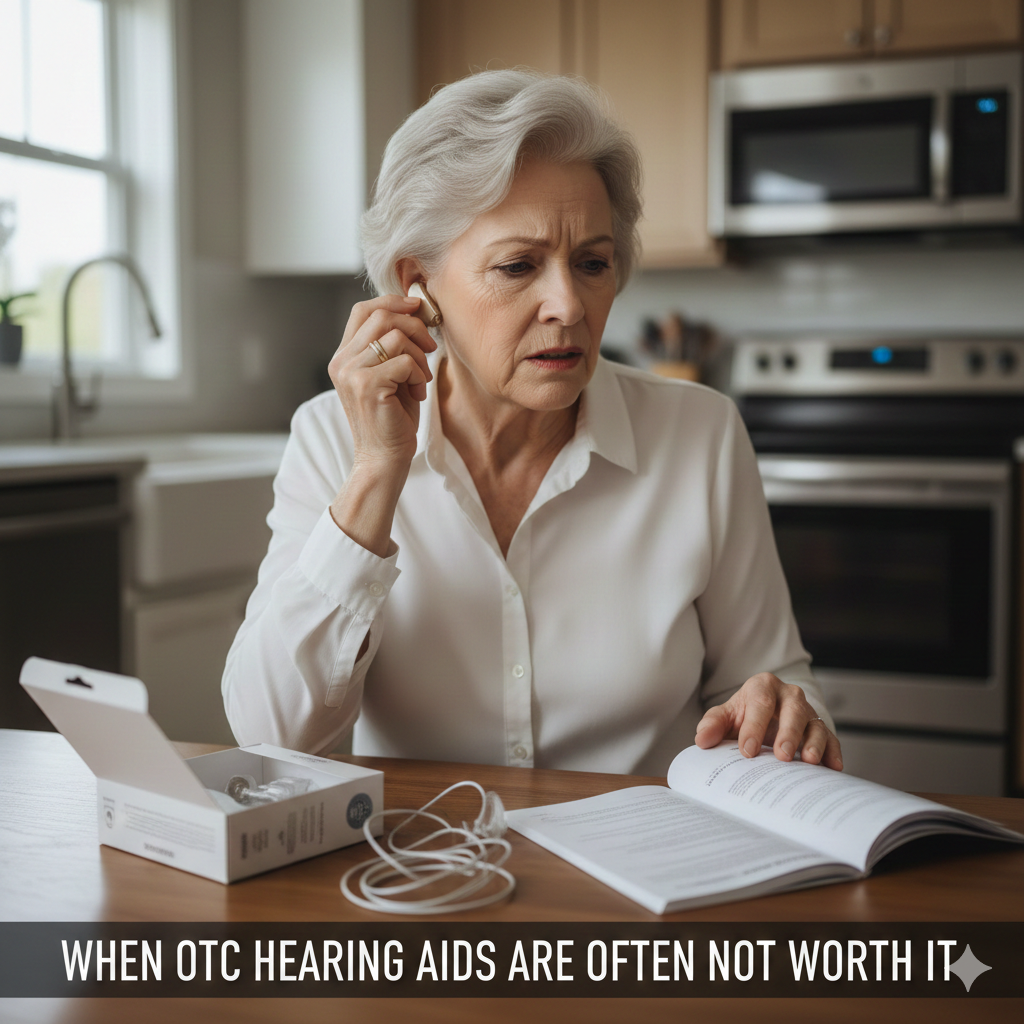
Higher-risk situations
One ear much worse than the other
Severe hearing loss
Significant tinnitus without hearing loss
Poor vision or dexterity
Discomfort using apps independently
[Expert Warning]
OTC self-fitting struggles with asymmetric hearing loss—professional fitting matters here.
Common First-Time Mistakes (and How to Avoid Them)
Mistake #1: Judging results in quiet rooms
Fix: Test in real environments—stores, cars, small groups.
Mistake #2: Making big setting changes
Fix: Adjust one parameter at a time, every few days.
Mistake #3: Wearing them only “when needed”
Fix: Wear them daily, even at home, to speed adaptation.
Information Gain: Why Week One Feels Worse Than Week Three
Most SERP articles skip the adaptation curve.
From real first-time usage patterns:
Week 1: Awareness overload (everything sounds loud)
Week 2: Speech improves; noise still annoying
Week 3–4: Brain filters better; fatigue drops
Many returns happen in week one—before benefits appear.
Unique Section — Beginner Mistake Most People Make
Confusing clarity with comfort.
First-time users often chase “comfortable” sound by reducing clarity. In practice, clearer speech may feel sharper at first—but leads to better long-term results.
OTC vs Prescription for First-Time Users (Table)
| Factor | OTC Hearing Aids | Prescription Hearing Aids |
| Learning curve | Moderate | Easier (guided) |
| Upfront cost | Lower | Higher |
| Control | User-managed | Professional |
| Adjustment speed | Slower initially | Faster |
| Best for | Mild–moderate loss | Complex loss |
[Money-Saving Recommendation]
Many first-time users succeed with OTC and never need prescription devices—making OTC a smart first step.
Practical Tips From First-Time Users
From real first-time experiences:
Start mornings with aids on
Use default presets for a week before tweaking
Track progress by fatigue reduction, not loudness
Keep a short adjustment log in the app
Internal Linking (Contextual)
“how hearing aids actually process sound” → How Hearing Aids Work
“who OTC hearing aids are best for” → Best OTC Hearing Aids
“early adoption decisions” → Hearing Aids for Mild Hearing Loss
Watch & Learn (YouTube — contextual)
“First week with OTC hearing aids: what to expect”
“Self-fitting hearing aids explained step by step”
(Embed after the adaptation section.)
Image & Infographic Suggestions
Infographic: “OTC Hearing Aid Adaptation Timeline”
Alt: OTC hearing aids first-time adaptation
Diagram: “Self-Fitting Process Explained”
Alt: OTC hearing aid self fitting
Visual: “Week 1 vs Week 3 Sound Perception”
Alt: hearing aid adjustment over time
FAQs
At least 30 days with consistent daily use.
Do OTC hearing aids work without a hearing test?
Yes, but a test improves results.
Are OTC hearing aids hard to adjust?
They require patience, not expertise.
Can I return OTC hearing aids if they don’t work?
Most reputable brands offer trial periods.
Will OTC hearing aids help tinnitus?
They can reduce awareness if hearing loss exists.
Conclusion
For first-time users, OTC hearing aids are worth it when expectations are realistic and usage is consistent. They’re not instant fixes—but for the right person, they’re a cost-effective entry into better hearing. Judge them over weeks, not days, and focus on effort reduction rather than instant perfection.
Internal link
Best OTC Hearing Aids: Who Should Buy Them
External link
Do Over-the-Counter Hearing Aids Actually Work? Pros and Cons Explained | El Dorado Hearing