Introduction — Why this matters now
How to clean hearing aids properly is one of the most overlooked factors in hearing aid performance and lifespan. Most hearing aid failures aren’t caused by defects—they’re caused by moisture, earwax, and skipped cleaning. Even premium devices can stop working within months if basic care is ignored, while budget models can last for years with consistent maintenance.
Modern hearing aids are small, powerful, and worn all day in a warm, humid environment. Earwax, sweat, skin oils, and dust build up quietly until sound quality drops or devices fail altogether. This guide explains exactly how to clean hearing aids properly—what to do daily, weekly, and monthly—without damaging sensitive components or voiding warranties.
The 40-Second Answer
Clean hearing aids properly by wiping them daily with a dry cloth, removing visible earwax, keeping microphones clear, and drying them overnight. Avoid water, alcohol, and household cleaners, which can damage internal electronics.
What Dirt Actually Does to Hearing Aids
Understanding the enemy helps you prevent damage.
Earwax
Blocks sound outlets
Causes muffled or distorted audio
Can push moisture deeper into the device
Moisture (sweat + humidity)
Corrodes internal parts
Causes intermittent sound dropouts
Shortens battery life
Dust and skin oils
Clog microphones
Reduce clarity over time
[Expert Warning]
If sound cuts in and out, cleaning—not reprogramming—is often the fix.
Daily Cleaning Routine (2–3 Minutes)
This routine prevents most problems.
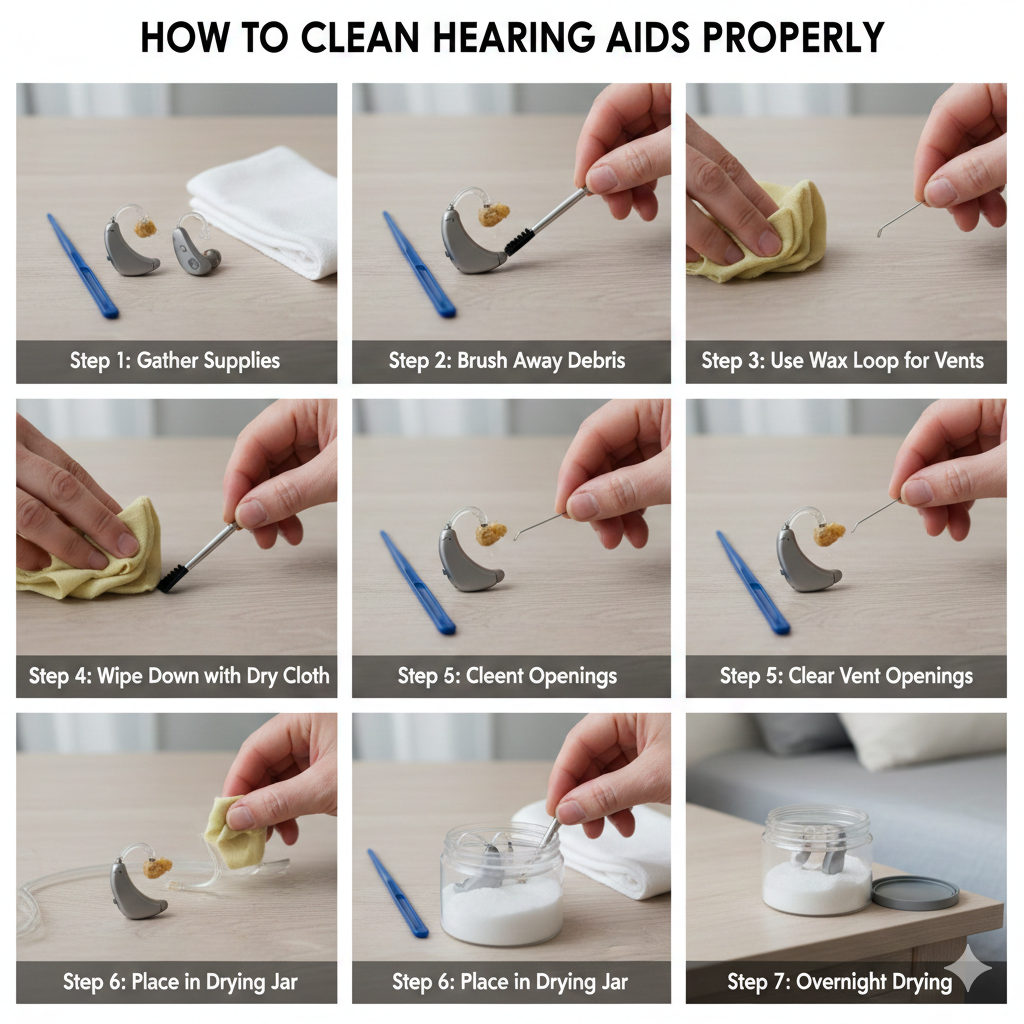
Step 1: Power off or open battery door
Always turn devices off before cleaning.
Step 2: Wipe with a dry, lint-free cloth
Remove moisture, oil, and surface debris.
Step 3: Clear wax from openings
Use the provided brush or wax pick gently.
Step 4: Store in a dry place overnight
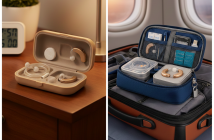
Preferably in a drying case or box.
[Pro-Tip]
Cleaning at night prevents moisture from sitting inside the device while you sleep.
Weekly Deep Clean (10 Minutes)
Once a week, go slightly deeper—carefully.
What to do
Remove domes or earmolds
Clean domes with mild soap only if removable
Let parts dry completely before reattaching
Inspect wax guards and replace if needed
What not to do
Don’t rinse the main device
Don’t use hair dryers or heat
Don’t soak any electronic part
Style-Specific Cleaning Differences 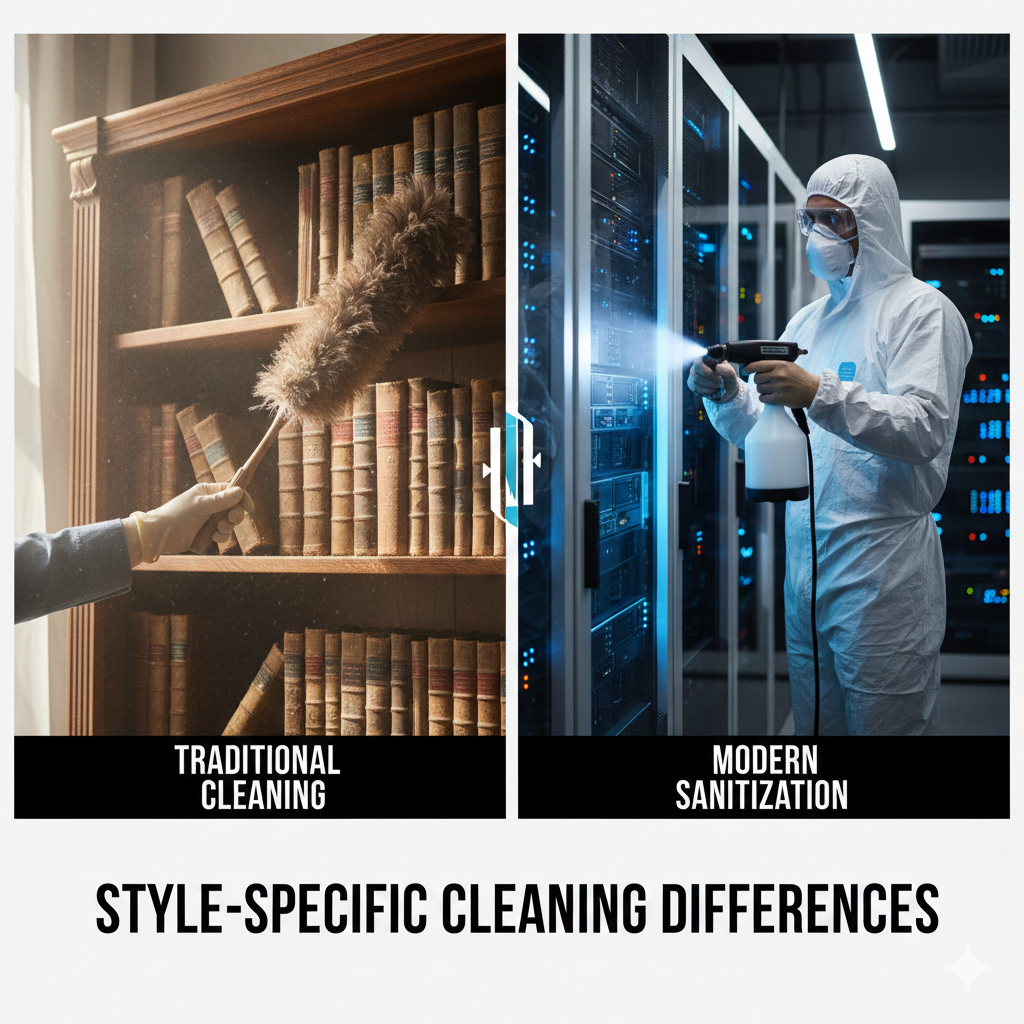
BTE & RIC hearing aids
Focus on domes, receivers, and tubing
Check wax guards regularly
ITE hearing aids
Pay extra attention to microphone ports
Wax buildup happens faster inside the ear
Common Cleaning Mistakes (and Safer Fixes)
Mistake #1: Using alcohol wipes
Fix: Use a dry cloth or manufacturer-approved wipes only.
Mistake #2: Running devices under water
Fix: Clean removable parts separately—never the electronics.
Mistake #3: Cleaning only when sound drops
Fix: Clean before problems appear.
[Money-Saving Recommendation]
A basic cleaning kit costs far less than a single out-of-warranty repair.
Information Gain: Why “Over-Cleaning” Can Be Harmful
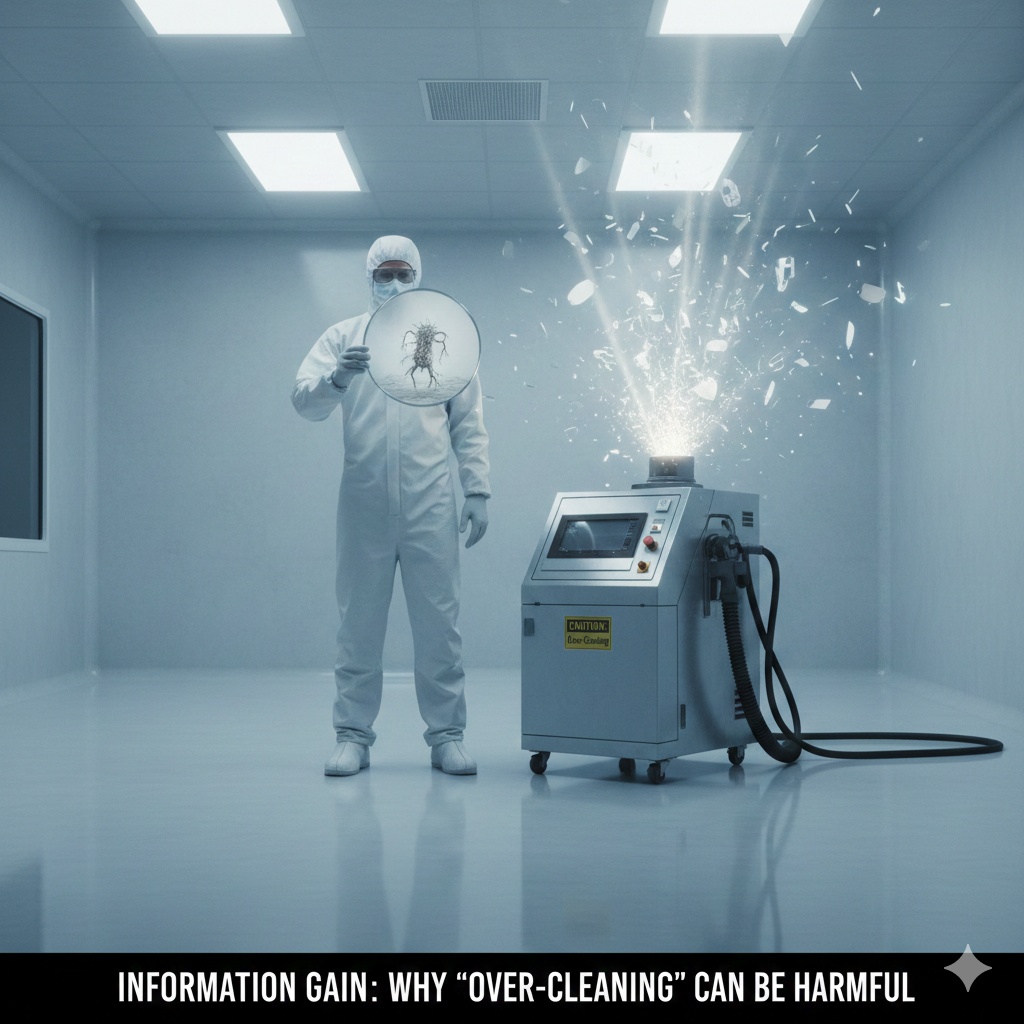
Top SERP articles focus on under-cleaning. Over-cleaning causes problems too.
From real-world patterns:
Excessive brushing damages microphone screens
Liquids seep in through tiny seals
Frequent disassembly wears connectors
Consistency beats aggression.
Unique Section — Beginner Mistake Most People Make
Cleaning in the morning instead of at night.
Morning cleaning traps moisture from overnight humidity inside the device. Night cleaning + drying prevents corrosion while you sleep.
Tools That Actually Help (and Those You Don’t Need)
Useful tools
Soft cloth
Wax brush/pick
Drying box
Replacement wax guards
Usually unnecessary
Vacuum gadgets
Compressed air
Household cleaners
Maintenance Schedule (Quick Reference Table)
| Task | Frequency | Time |
| Wipe down | Daily | 2 min |
| Wax removal | Daily | 1 min |
| Dome cleaning | Weekly | 10 min |
| Drying | Nightly | Passive |
| Wax guard check | Monthly | 5 min |
Internal Linking (Contextual)
“moisture protection basics” → Are Hearing Aids Waterproof?
“style-specific care needs” → BTE vs RIC vs ITE Hearing Aids
“repair vs replace decisions” → Cheapest Hearing Aids That Still Perform Reliably
Watch & Learn (YouTube — contextual)
“How to clean hearing aids step by step”
“Hearing aid cleaning mistakes to avoid”
(Embed after the daily routine section.)
Image & Infographic Suggestions
Infographic: “Daily Hearing Aid Cleaning Routine”
Alt: how to clean hearing aids properly daily
Diagram: “Wax & Moisture Damage Points”
Alt: hearing aid wax moisture damage
Visual: “Correct vs Incorrect Cleaning Tools”
Alt: hearing aid cleaning tools comparison
FAQs
How often should I clean my hearing aids?
Light cleaning daily and deeper cleaning weekly works best.
Can I use alcohol to clean hearing aids?
No—alcohol can damage seals and electronics.
Do drying boxes really help?
Yes—nightly drying significantly extends device life.
Why does sound get muffled suddenly?
Wax blockage is the most common cause.
Can improper cleaning void warranty?
Yes—using liquids or heat often does.
Conclusion
Cleaning hearing aids properly isn’t complicated—it’s consistent. A few minutes each day prevents most failures, preserves sound quality, and saves money on repairs. Treat cleaning as part of wearing hearing aids, not a reaction to problems, and your devices will reward you with years of reliable performance.
Internal link
Repair vs Replace Hearing Aids: Smart Decision Guide
External link
How To Clean A Hearing Aid | Instructions & Video | OutsideClinic