Introduction — Why this matters now
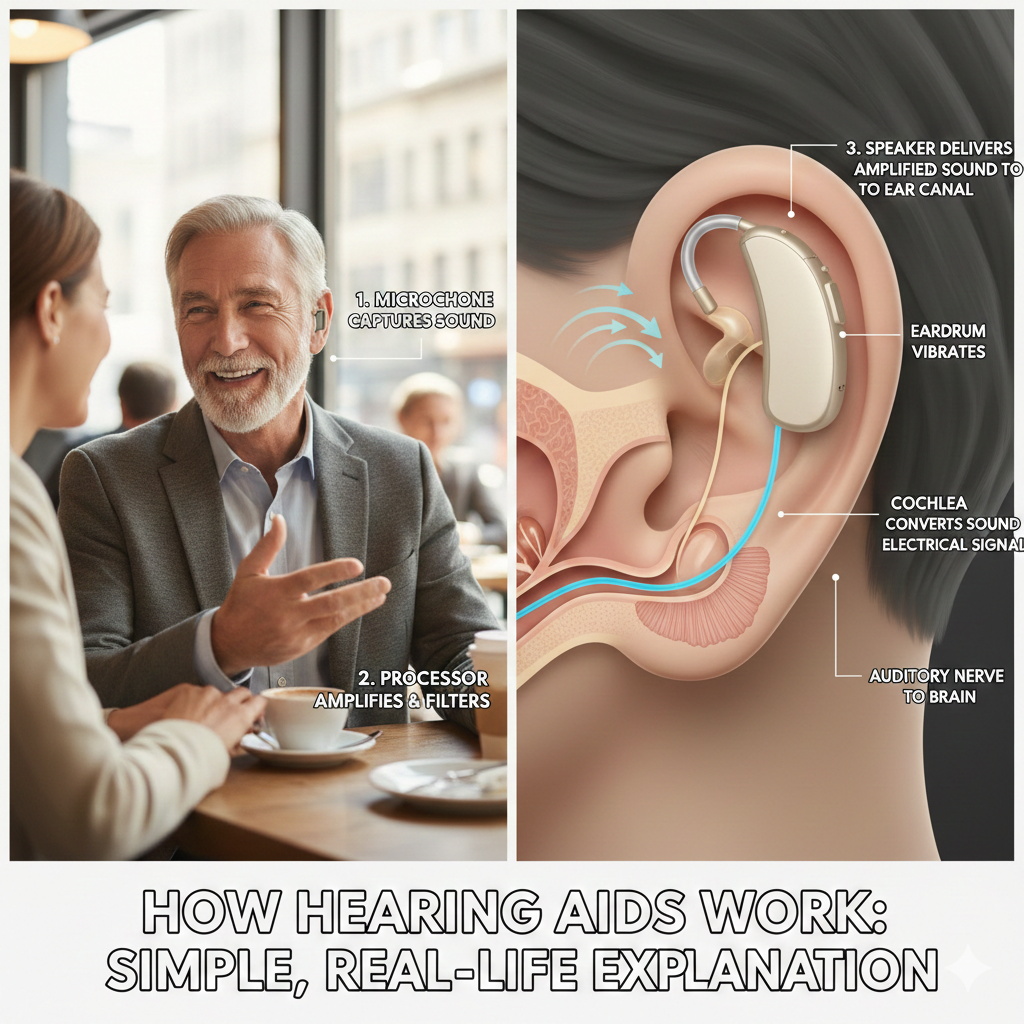
Hearing aids work by capturing sound, processing it digitally to emphasize speech, and delivering a clearer signal your brain learns to use over time. They don’t “restore” hearing like glasses restore vision—and that difference explains most frustration new users feel.
OTC hearing aids and self-fitting apps have exploded access, which is great—but it also means many people buy devices before understanding how hearing actually works. That mismatch between expectations and reality leads to returns, disappointment, and the belief that “hearing aids don’t work.” This guide explains the full journey—from the moment sound enters a microphone to the moment your brain makes sense of it—so you know what hearing aids do well, where they struggle, and how to get the best results in real life.
The 40-Second Answer
How hearing aids work: tiny microphones pick up sound, a digital processor analyzes it thousands of times per second to prioritize speech, and a receiver delivers the adjusted sound into your ear. Your brain then adapts to that signal over days and weeks—this adaptation is the key to clarity.
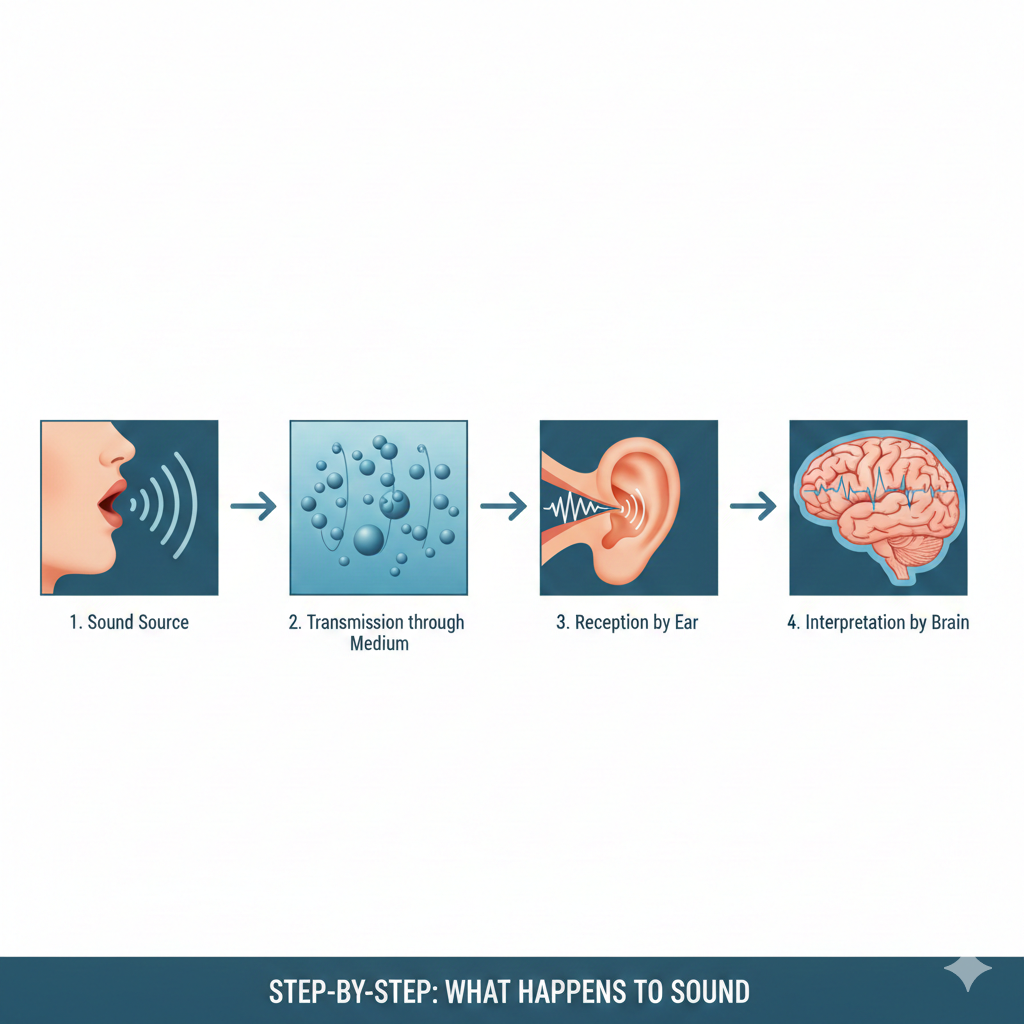
Step-by-Step: What Happens to Sound
1) Sound pickup (microphones)
Modern devices use two or more microphones. Beyond volume, they collect directional cues—where sound is coming from—to help focus on speech in front of you.
2) Digital processing (the “brain” of the device)
A processor analyzes frequency, loudness, timing, and patterns that resemble speech. It boosts the frequencies you struggle with and softens others. This happens continuously, not once.
3) Delivery to the ear (receiver/speaker)
The adjusted sound travels through the receiver into the ear canal and onward through your natural hearing pathway to the brain.
[Expert Warning]
Hearing aids cannot perfectly separate speech from noise. If a product promises silence in restaurants, that’s marketing—not physics.
What Hearing Aids Do Well—and Where Limits Appear

Where they shine
Speech clarity in quiet
Awareness of soft sounds (footsteps, turn signals, birds)
Reduced listening fatigue over time
Where they struggle
Busy restaurants and echoey rooms
Multiple speakers talking at once
Sudden, unpredictable noise
Why this matters: knowing the limits helps you choose settings, seating, and expectations that actually improve outcomes.
Common Mistakes (and Fixes That Work)
Mistake #1: Expecting “normal hearing”
Fix: Plan a 2–6 week adaptation window. Clarity improves as your brain relearns sound patterns.
Mistake #2: Cranking volume for clarity
Fix: Use environment programs (speech-in-noise, restaurant) instead of volume alone.
Mistake #3: Testing only at home
Fix: Evaluate devices in real environments—grocery stores, offices, family dinners.
[Pro-Tip]
Wear your hearing aids 8+ hours daily during the first month. Consistency speeds adaptation more than any setting tweak.
Information Gain: Why Brain Adaptation Beats Hardware
Most top pages list components. They skip the most important factor: neuroplasticity. With hearing loss, your brain learns to ignore missing sounds. When aids reintroduce them, the brain initially flags them as “noise.” Over weeks, neural pathways recalibrate—speech becomes clearer and less tiring.
Implications you won’t hear in ads:
Premium hardware won’t bypass adaptation
Early, consistent use outperforms short “try-ons”
Mild loss users often adapt fastest
Unique Insight — The Beginner Mistake Most People Make
Judging hearing aids in silence. Quiet rooms hide benefits and exaggerate oddities. Devices prove their value in motion—checkout lines, side conversations, and street noise. Give them those tests.
Practical Tips From Real Usage
From real-world fittings and daily wear patterns:
Seat choice matters (face speakers; avoid kitchens)
Program switching beats volume
Short listening breaks early on prevent fatigue
[Money-Saving Recommendation]
Before upgrading hardware, invest time in fine-tuning programs and practice. Many users recover clarity without spending more.
Hearing Aid Components at a Glance (Table)
| Component | What It Does | Why It Matters |
| Microphones | Capture sound & direction | Helps focus on speech |
| Processor | Analyzes & reshapes sound | Prioritizes speech cues |
| Receiver | Delivers sound to ear | Comfort & clarity |
| Battery/Power | Runs the system | Reliability & runtime |
| Programs | Environment presets | Real-world usability |
Internal Linking (Contextual)
“how sound delivery differs by style” → BTE vs RIC vs ITE Hearing Aids
“early decisions for mild loss” → Hearing Aids for Mild Hearing Loss
“daily care that preserves clarity” → How to Clean Hearing Aids Properly
Watch & Learn (YouTube — contextual)
“How digital hearing aids process sound” (visual breakdown of microphones → processor → receiver)
“Hearing aid adaptation timeline explained” (what weeks 1–6 feel like)
(Embed these videos under the sections above for on-page engagement.)
Image & Infographic Suggestions
Infographic: “Sound Pathway: Environment → Device → Brain”
Alt: how hearing aids process sound from microphone to brain
Diagram: “Speech-in-Noise vs Quiet Processing”
Alt: hearing aid speech processing comparison
Visual: “Adaptation Timeline (Week 1–6)”
Alt: hearing aid brain adaptation timeline
FAQs
Do hearing aids restore normal hearing?
No. They improve access to sound; your brain does the learning.
Why do voices sound strange at first?
Because your brain is re-exposed to sounds it hasn’t processed clearly.
How long does adaptation take?
Typically 2–6 weeks with consistent daily wear.
Are OTC hearing aids different inside?
They’re similar tech, but rely more on self-fitting software.
Can hearing aids damage hearing?
Properly fitted devices do not damage hearing.
Conclusion
Hearing aids succeed when expectations meet biology. The device shapes sound—but your brain decides clarity. Give it time, wear consistently, test in real places, and adjust programs thoughtfully. When you understand how hearing aids work, frustration drops and results rise.
Internal link
Bluetooth Hearing Aids: iPhone vs Android Explained
external link