Introduction — Why this matters now
Are hearing aids waterproof?
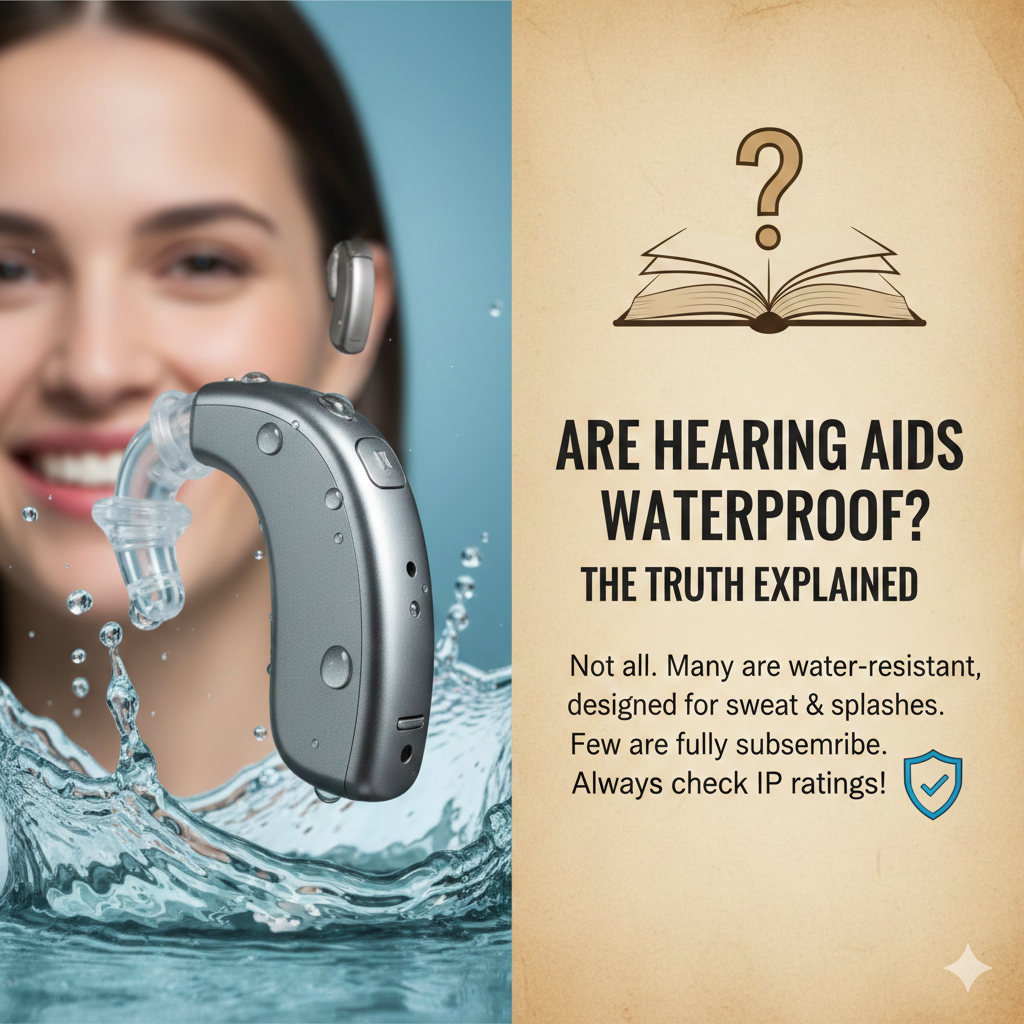
Most hearing aids are not waterproof—they are water-resistant. That difference may sound minor, but it’s the reason thousands of devices fail every year due to sweat, humidity, and accidental water exposure.
As hearing aids become smaller, more powerful, and more connected, moisture protection has become both more important and more misunderstood. Gym workouts, rain, face masks, and humid climates expose devices to moisture in ways many users never consider.
This guide explains what “waterproof” actually means, how to read IP ratings without confusion, where moisture damage really comes from, and how to protect your hearing aids without overthinking it.
The 40-Second Answer
Hearing aids are usually water-resistant, not waterproof. Most can handle sweat, humidity, and light rain, but submersion—showers, swimming, or heavy water exposure—can permanently damage internal components unless a device is specifically rated for it.
Waterproof vs Water-Resistant: The Real Difference
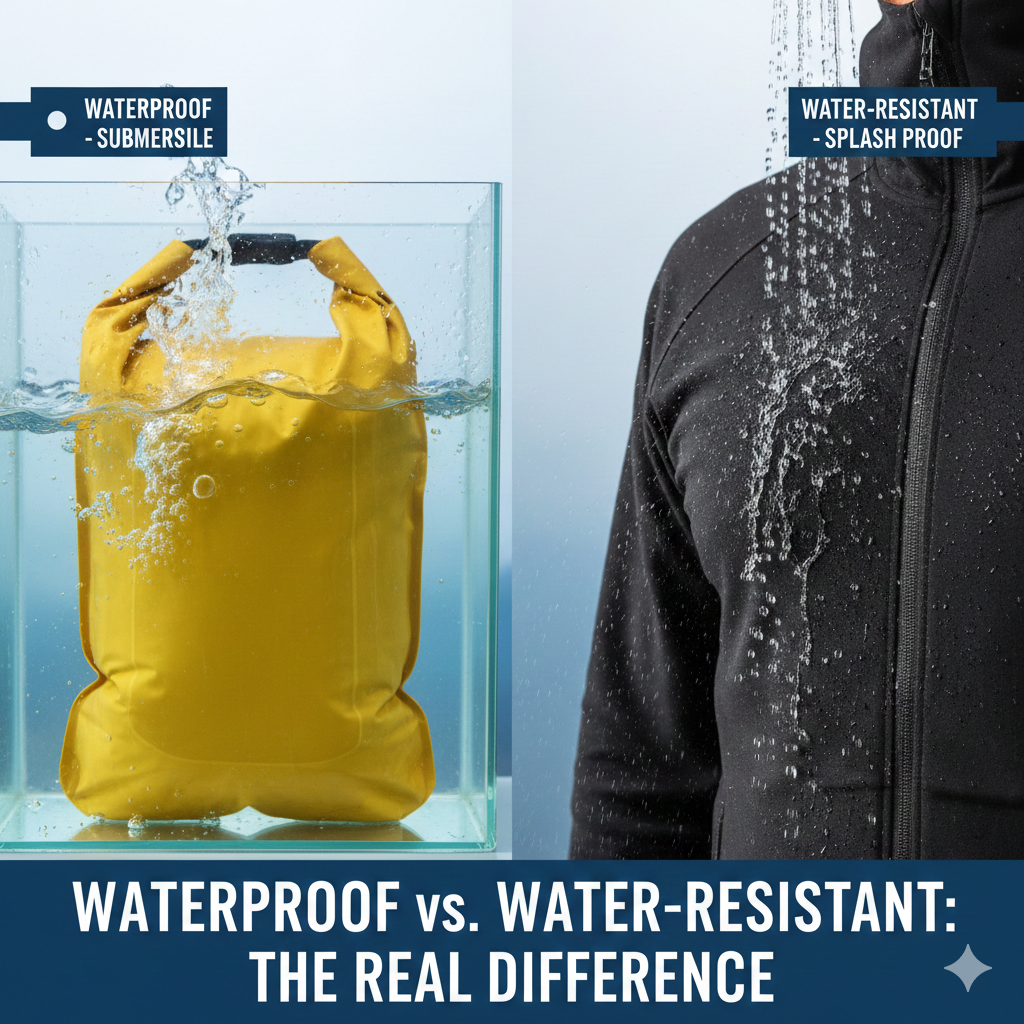
Waterproof (rare)
Can be submerged in water
Designed for swimming or showering
Very uncommon in hearing aids
Water-resistant (common)
Protected against sweat and light moisture
Not safe for submersion
Protection varies by model and rating
[Expert Warning]
“Waterproof” is often used loosely in marketing. Always check the IP rating, not the ad copy.
Understanding IP Ratings (Without the Jargon)
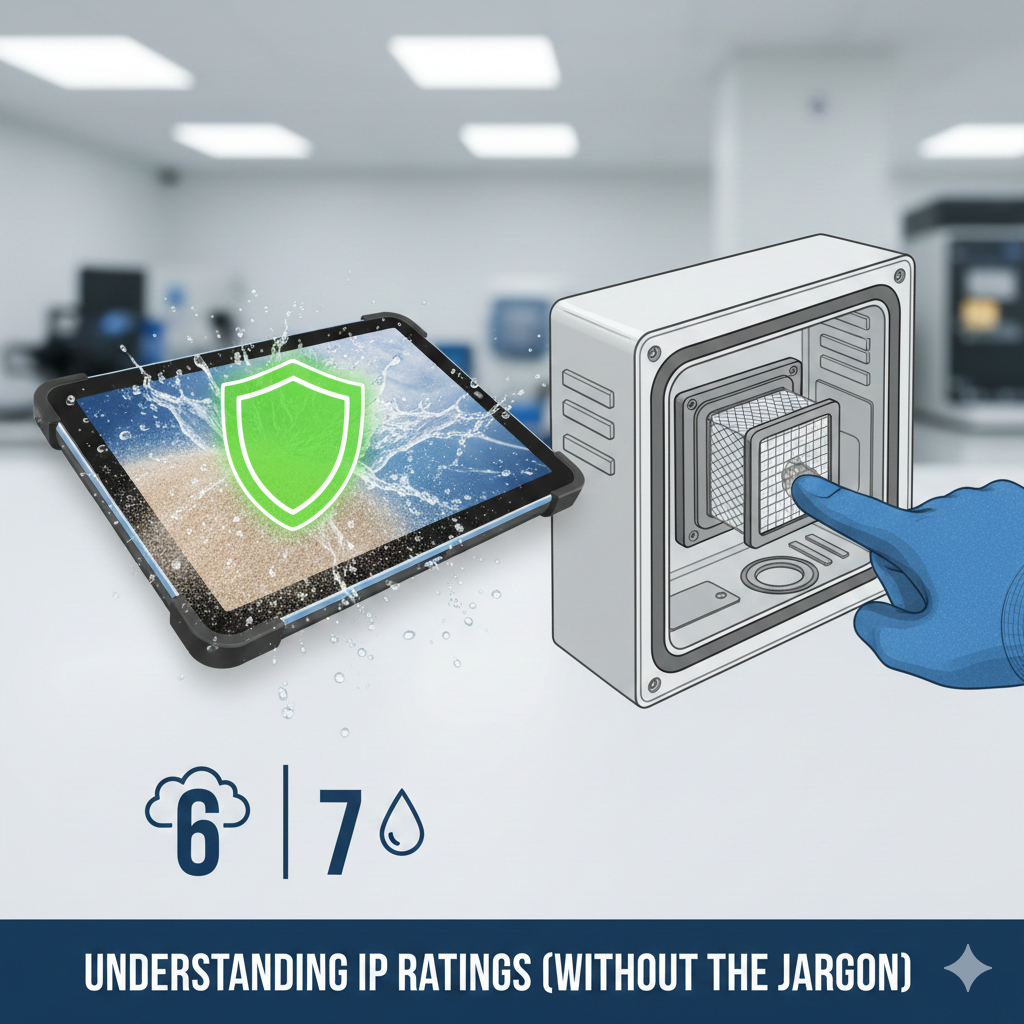
IP ratings describe protection against dust (first number) and water (second number).
| IP Rating | What It Means | Real-Life Example |
| IP67 | Dust-tight, brief immersion | Rain, sweat, splashes |
| IP68 | Dust-tight, longer immersion | Heavy rain, high humidity |
| IPX4 | Splash resistant only | Light sweat |
| No rating | Unknown protection | High risk |
Key takeaway: Even IP68 does not mean “safe to swim.”
Where Water Damage Actually Comes From
Most damage isn’t from dropping aids in a sink—it’s from daily moisture exposure.
Common hidden risks
Sweat during workouts
Humidity trapped in the ear canal
Wearing aids into the bathroom during hot showers
Condensation from cold-to-warm transitions
[Pro-Tip]
Sweat is more damaging than rain because it contains salt, which corrodes electronics faster.
Common Mistakes (and How to Avoid Them)
Mistake #1: Wearing aids in the shower “just once”
Fix: Remove them before entering bathrooms with steam.
Mistake #2: Wiping with tissue only
Fix: Use a soft cloth and let devices air-dry fully.
Mistake #3: Ignoring moisture until sound drops
Fix: Dry aids daily, not only when problems appear.
Information Gain: Moisture Damage Is Often Delayed
Top SERP articles imply water damage is instant. In reality, moisture damage is often slow and cumulative.
What users experience:
Gradual sound distortion
Intermittent cutting out
Battery drain issues
Sudden failure weeks later
By the time sound changes, internal corrosion may already be advanced.
Unique Section — Beginner Mistake Most People Make
Assuming “rain-safe” means “gym-safe.”
Gyms combine sweat, heat, and movement—perfect conditions for moisture intrusion. Many users blame “bad devices” when the real issue is unmanaged sweat exposure.
Practical Protection Habits That Actually Work
From real-world usage patterns:
Remove aids before workouts, if possible
Use moisture-wicking retention cords
Store aids in a drying case overnight
Open battery doors or power off rechargeable aids when drying
[Money-Saving Recommendation]
A simple drying box costs far less than out-of-warranty repairs and often extends device life by years.
Comparison Table: Water Exposure Safety
| Situation | Safe? | Recommendation |
| Light rain | Yes | Wipe dry afterward |
| Sweating | Limited | Dry daily |
| Showering | No | Remove aids |
| Swimming | No | Remove aids |
| Humid weather | Risk | Use drying case |
Internal Linking (Contextual)
“daily care habits that prevent failure” → How to Clean Hearing Aids Properly
“style-based moisture differences” → BTE vs RIC vs ITE Hearing Aids
“early device care decisions” → Hearing Aids for Mild Hearing Loss
Watch & Learn (YouTube — contextual)
“IP ratings explained for hearing aids”
“How sweat damages hearing aid electronics”
(Embed after the IP ratings section.)
Image & Infographic Suggestions
Infographic: “Waterproof vs Water-Resistant Hearing Aids”
Alt: are hearing aids waterproof or water resistant
Diagram: “Moisture Entry Points in Hearing Aids”
Alt: hearing aid moisture damage points
Visual: “Daily Moisture Protection Routine”
Alt: hearing aid moisture care steps
FAQs
Can I wear hearing aids in the rain?
Yes, briefly—wipe them dry afterward.
Are any hearing aids fully waterproof?
Very few; most are water-resistant only.
Does sweat damage hearing aids?
Yes—sweat is one of the most common causes of failure.
Can moisture damage be repaired?
Sometimes, but corrosion often causes permanent issues.
Do drying cases really help?
Yes, consistent drying significantly reduces failure risk.
Conclusion
Hearing aids aren’t fragile—but they aren’t waterproof either. Understanding the limits of water resistance, managing sweat and humidity, and building simple daily habits can prevent most moisture-related failures. Protecting your devices isn’t about being careful once—it’s about being consistent every day.
Internal link
Hearing Aids for Mild Hearing Loss: When to Start
External link