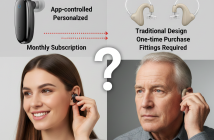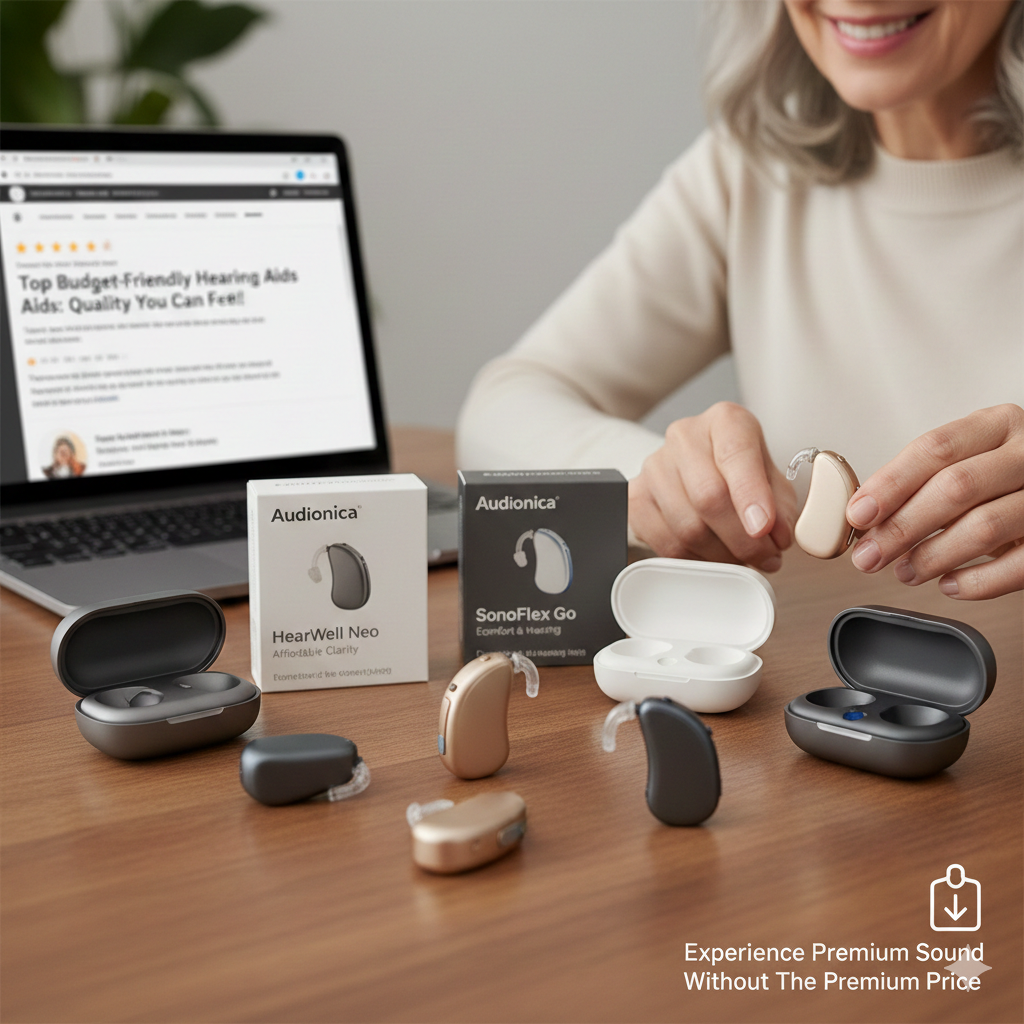
Introduction — Why this matters now
Affordable hearing aids can sound surprisingly good—but only if you avoid the price traps that turn “budget” into “regret.” Many people assume lower cost automatically means poor sound, discomfort, or short lifespan. That’s sometimes true—but not always.
With OTC hearing aids and direct-to-consumer brands expanding fast, the market now includes devices that cut costs in smart ways (fewer clinics, simpler features) rather than harmful ways (bad microphones, unstable apps). This guide explains what “affordable” really means in hearing aids, where corners can be cut safely, where they absolutely shouldn’t be, and how to identify budget options that still feel premium in daily use.
The 40-Second Answer
The best affordable hearing aids focus on clear speech, comfortable fit, and stable software—not flashy features. Devices that simplify customization and limit unnecessary extras often deliver better real-world performance at a lower cost.
What “Affordable” Means in Hearing Aids (and What It Doesn’t)
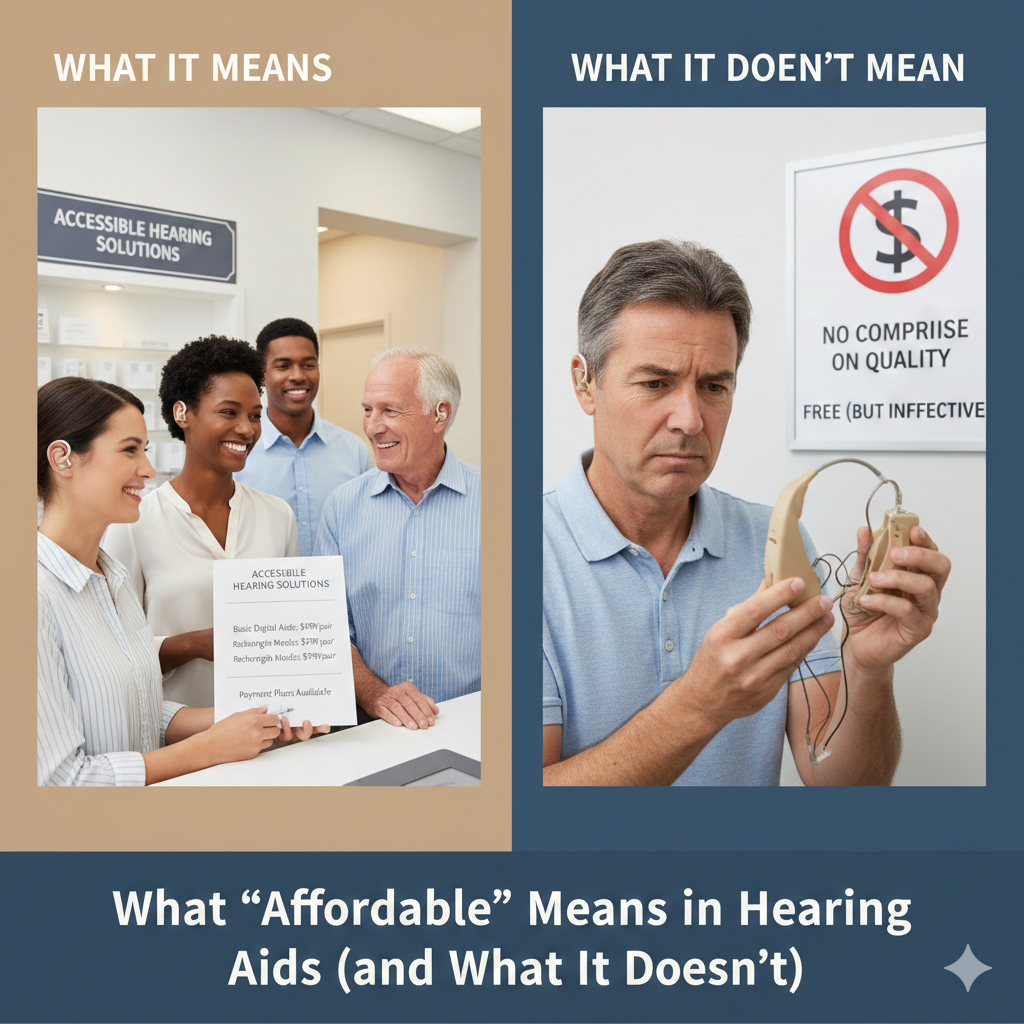
Affordable does not mean:
Weak amplification
Outdated technology
Disposable quality
Affordable usually means:
OTC or direct-to-consumer sales
Fewer in-person services bundled
App-based adjustments
Narrower feature sets
[Expert Warning]
The fastest way to waste money is buying the cheapest option without checking return policies and support quality.
Where Budget Hearing Aids Often Fail
Understanding common failure points helps you avoid them.
1) Poor speech clarity
Cheap devices boost everything equally, making noise louder—not speech clearer.
2) Uncomfortable fit
Hard plastics, poor domes, or limited size options cause soreness and fatigue.
3) Unstable apps
Frequent crashes or lost settings ruin daily usability.
Where Affordable Hearing Aids Can Still Be Excellent

Smart cost savings
Fewer physical buttons
App-first controls
Limited but well-tuned presets
Strong performance areas
Quiet and moderate noise settings
One-on-one conversations
TV and small group listening
[Pro-Tip]
Fewer features often mean less confusion and better consistency—especially for new users.
Common Buyer Mistakes (and How to Avoid Them)
Mistake #1: Chasing the lowest price
Fix: Set a value floor—below it, compromises hurt daily use.
Mistake #2: Ignoring return windows
Fix: Choose brands offering 30–45 day trials.
Mistake #3: Overvaluing invisibility
Fix: Comfort and clarity matter more than size.
Information Gain: The “Value Floor” Concept
Most SERP articles rank devices but don’t explain why some prices work and others don’t.
From real-world patterns, there’s a value floor—a price range below which devices tend to:
Use inferior microphones
Skip meaningful noise management
Break or fail early
Above that floor, improvements become more about features than fundamentals. Staying just above it delivers the best cost-to-benefit ratio.
Unique Section — Practical Insight From Experience
Many users who upgrade from ultra-cheap devices say the same thing:
“The sound isn’t dramatically louder—it’s just less tiring.”
That reduction in listening effort is the real marker of quality, not volume.
Affordable Hearing Aids vs Ultra-Cheap Devices (Table)
| Factor | Affordable Quality Aids | Ultra-Cheap Devices |
| Speech clarity | Tuned for voices | Boosts all sounds |
| Comfort | Multiple dome options | One-size fits all |
| App stability | Reliable | Buggy or missing |
| Returns | Trial period | Often none |
| Longevity | Years | Months |
[Money-Saving Recommendation]
Spending slightly more upfront often avoids replacement costs within the first year.
Real-World Scenario: Budget-Conscious Buyer
User profile: Mild hearing loss, fixed income
Outcome: Affordable OTC aids reduced fatigue and TV volume without premium upgrades
Key factor: Clear expectations—not chasing perfection.
Practical Tips for Choosing Affordable Hearing Aids
From real users:
Prioritize speech clarity presets
Test in noisy environments early
Keep default settings for the first week
Evaluate comfort after 4–6 hours, not 10 minutes
Internal Linking (Contextual)
“who OTC hearing aids work best for” → Best OTC Hearing Aids
“first-time expectations” → Are OTC Hearing Aids Worth It?
“early adoption considerations” → Hearing Aids for Mild Hearing Loss
Watch & Learn (YouTube — contextual)
“Affordable hearing aids tested in real life”
“Why cheap hearing aids fail speech clarity tests”
(Embed after the value floor section.)
Image & Infographic Suggestions
Infographic: “Affordable vs Cheap Hearing Aids”
Alt: best affordable hearing aids comparison
Diagram: “Speech vs Noise Amplification”
Alt: hearing aid sound processing budget devices
Visual: “Listening Fatigue Reduction Over Time”
Alt: hearing aid comfort long-term use
FAQs
Are affordable hearing aids safe to use?
Yes, when they meet regulations and are used correctly.
Do affordable hearing aids last long?
Quality models often last several years with proper care.
Can affordable hearing aids handle noisy places?
They manage moderate noise well but struggle in extreme noise.
Are cheap online amplifiers the same as hearing aids?
No—many lack regulation and proper processing.
Should I upgrade later?
Many users don’t need to if expectations are realistic.
Conclusion
The best affordable hearing aids succeed by doing fewer things well. When clarity, comfort, and stability are prioritized over flashy features, budget-friendly devices can deliver genuinely satisfying daily performance. The key is avoiding the race to the bottom—and choosing value over price.
Internal link
Are OTC Hearing Aids Worth It for First-Time Users?
External link