Introduction — Why this matters now
Cheapest hearing aids can either solve a real problem—or create a new one. With prices scattered across a wide range, many buyers try to spend as little as possible, only to end up with muffled speech, poor comfort, or devices that fail within months.
The good news is that there is a practical price floor where hearing aids remain reliable. Below that floor, corners get cut that directly affect clarity, fit, and long-term usability. This guide explains where that floor sits in real-world terms, how to identify dependable low-cost options, and which “too good to be true” deals usually disappoint. If your budget is tight, this is how to spend it wisely.
The 40-Second Answer
The cheapest hearing aids that still perform reliably focus on clear speech processing, comfortable fit, and stable software—not maximum volume or flashy features. OTC devices just above the ultra-cheap tier usually deliver the best value without major compromises.
What “Cheapest” Really Means in Hearing Aids
“Cheap” in hearing aids can describe three very different things:
Affordable & regulated (good value)
Bare-minimum devices (mixed results)
Unregulated sound amplifiers
[Expert Warning]
Devices sold as “sound amplifiers” without regulation often boost noise and speech equally—making listening harder, not easier.
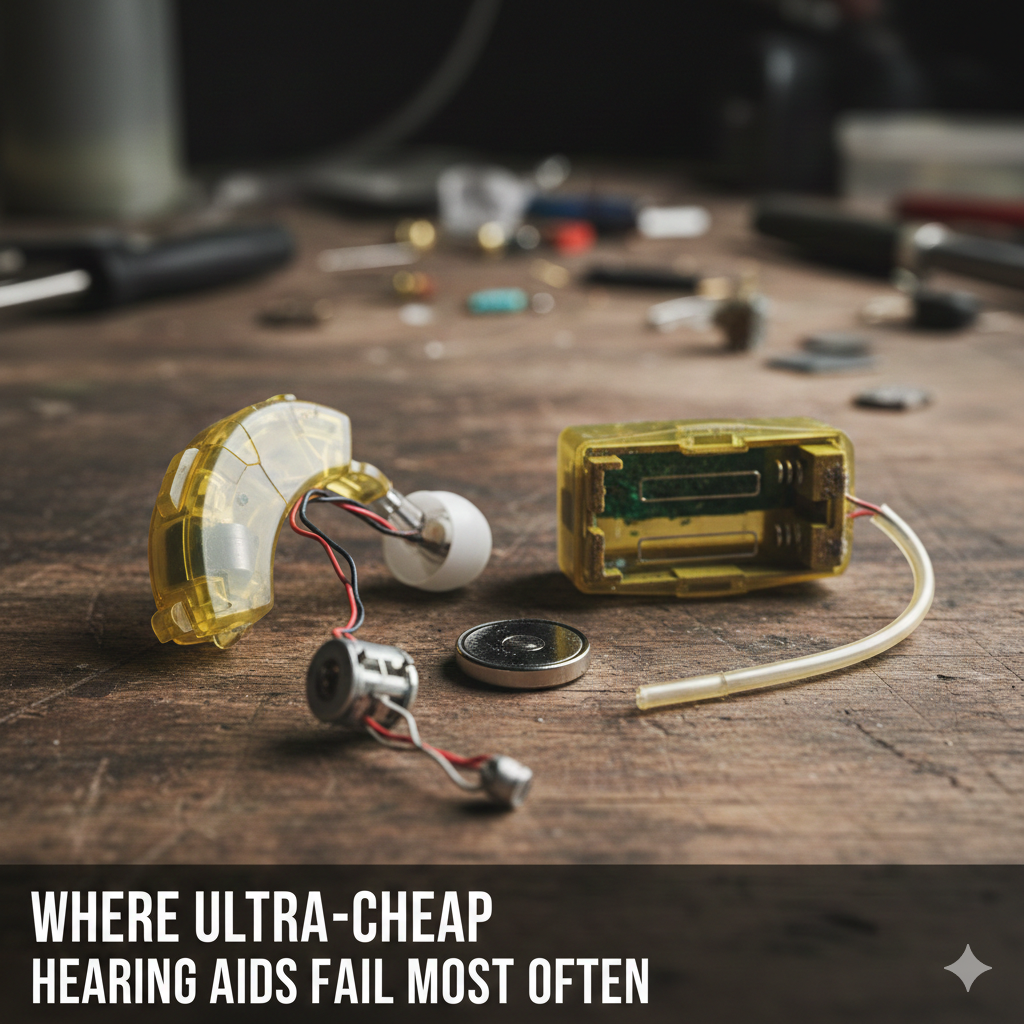
Where Ultra-Cheap Hearing Aids Fail Most Often
1) Speech clarity
They amplify everything, which makes restaurants unbearable and conversations tiring.
2) Comfort and fit
Limited dome sizes and rigid materials cause soreness after a few hours.
3) Reliability
Moisture protection and quality control are often weak, leading to early failure.
Where Low-Cost Hearing Aids Can Still Succeed
Reliable budget hearing aids tend to:
Use basic but focused speech processing
Offer open-fit designs that reduce pressure
Rely on simple, stable apps or preset programs
Include return periods and warranties
[Pro-Tip]
Fewer features often mean fewer things to break—and better long-term reliability.
Common Buyer Mistakes (and Smarter Fixes)
Mistake #1: Buying the absolute lowest price
Fix: Spend slightly more to cross the reliability threshold.
Mistake #2: Ignoring return policies
Fix: Choose brands with at least 30 days to test.
Mistake #3: Expecting premium performance
Fix: Judge success by reduced fatigue, not silence in noise.
Information Gain: The “Reliability Floor”
Most SERP articles rank devices without explaining why some cheap options work.
From real-world patterns, there’s a reliability floor:
Below it: poor microphones, weak housings, unstable apps
Above it: consistent speech clarity and acceptable durability
Once you cross that floor, extra spending mostly buys convenience—not core performance.
Unique Section — Practical Insight From Experience
Many users upgrading from ultra-cheap devices say:
“I didn’t hear more—I just stopped straining.”
That shift—less mental effort—is the real sign you’ve crossed the reliability floor.
Cheapest Reliable Options vs Risky Bargains (Table)
| Category | Reliability | Typical Experience |
| Regulated OTC (entry-level) | High | Clearer speech, stable |
| Direct-to-consumer budget | Medium | Works with patience |
| Unregulated amplifiers | Low | Loud but unclear |
[Money-Saving Recommendation]
If a device lacks a trial period, assume the risk is on you—and budget for a replacement.
Real-World Scenario: Fixed Income Buyer
Profile: Mild hearing loss, tight budget
Outcome: Entry-level OTC reduced fatigue and TV volume
Key factor: Clear expectations and consistent wear
Practical Tips for Getting the Most From Cheap Hearing Aids
From real users:
Wear them daily to adapt faster
Test in noise early
Clean and dry nightly
Avoid constant setting changes
Internal Linking (Contextual)
“OTC options that balance price and quality” → Best OTC Hearing Aids
“how cost tiers differ” → How Much Do Hearing Aids Really Cost?
“insurance vs out-of-pocket math” → Hearing Aid Insurance Options That Actually Help
Watch & Learn (YouTube — contextual)
“Cheap vs affordable hearing aids tested”
“Why sound amplifiers disappoint”
(Embed after the reliability floor section.)
Image & Infographic Suggestions (1200×628 px)
Infographic: “Cheap vs Reliable Hearing Aids”
Alt: cheapest hearing aids that work
Diagram: “Speech vs Noise Amplification”
Alt: budget hearing aid sound processing
Visual: “Reliability Over 12 Months”
Alt: hearing aid durability comparison
FAQs
Are cheap hearing aids safe?
Regulated OTC devices are safe; unregulated amplifiers are riskier.
Do cheap hearing aids last long?
Reliable budget models can last years with care.
Can cheap hearing aids help tinnitus?
They may reduce awareness if hearing loss exists.
Is it better to buy used hearing aids?
Only if refurbished with warranty.
Should I upgrade later?
Many users don’t need to if expectations are realistic.
Conclusion
The cheapest hearing aids that work aren’t the ones with the lowest price tag—they’re the ones that cross the reliability floor. When speech is clearer, comfort lasts all day, and devices don’t fail early, budget hearing aids can deliver real value. Spend just enough to avoid frustration, and you’ll often save more in the long run.
Internal link
): Hearing Aid Insurance Options That Actually Help
External link