Introduction — Why this matters now
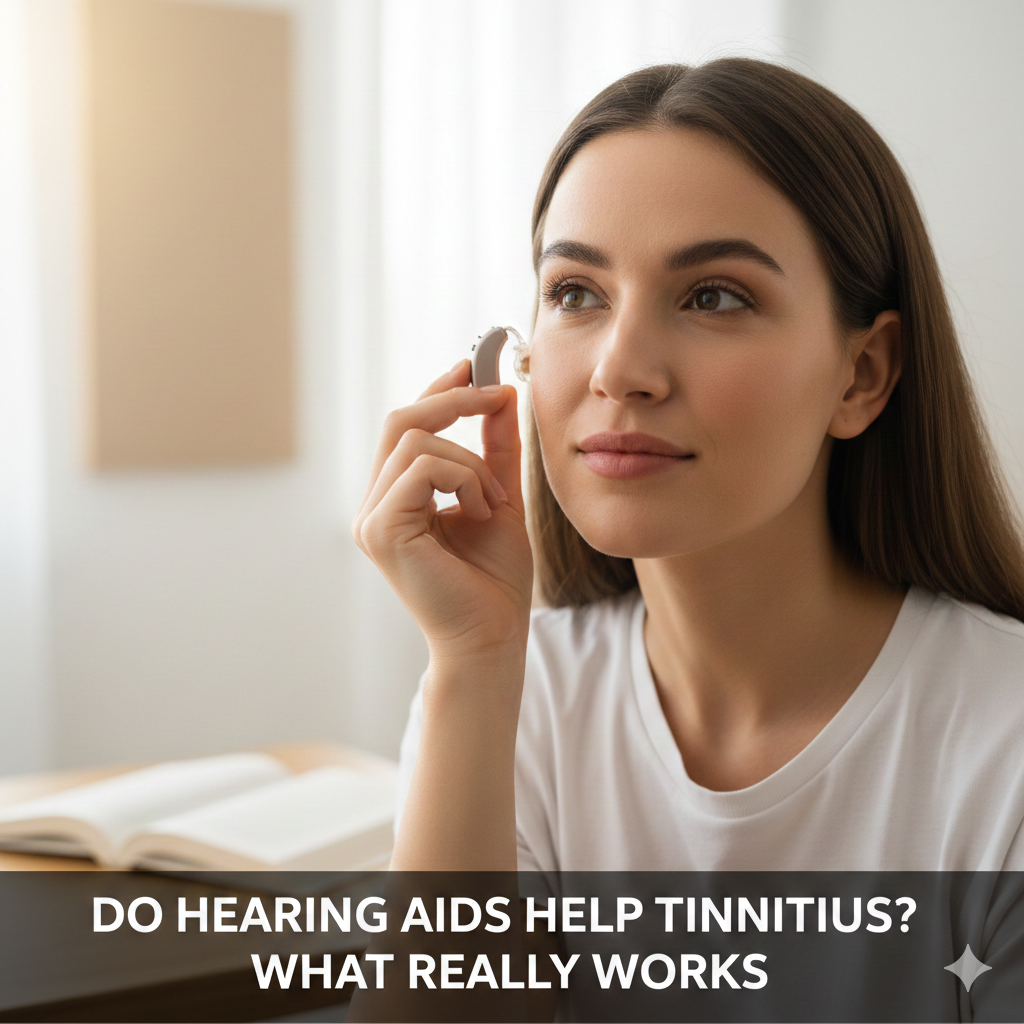
Do hearing aids help tinnitus? For many people, hearing aids can reduce how loud or noticeable tinnitus feels—but they don’t cure it, and they don’t work the same way for everyone. This gap between expectation and reality is why tinnitus treatment causes so much confusion and frustration.
Search interest in tinnitus has risen alongside OTC hearing aids and app-based sound therapy, as people look for relief without medication or invasive treatment. Some users experience real improvement, while others feel little change—or even notice tinnitus more at first. This article explains why results vary, when hearing aids help most, what masking actually does, and how to avoid common mistakes that derail progress.
The 40-Second Answer
Do hearing aids help tinnitus?
Yes—for many people with hearing loss, hearing aids reduce tinnitus awareness by restoring background sound and lowering the brain’s gain. They do not cure tinnitus, and benefits depend on hearing profile, consistency of use, and expectations.
Why Tinnitus Often Feels Louder With Hearing Loss
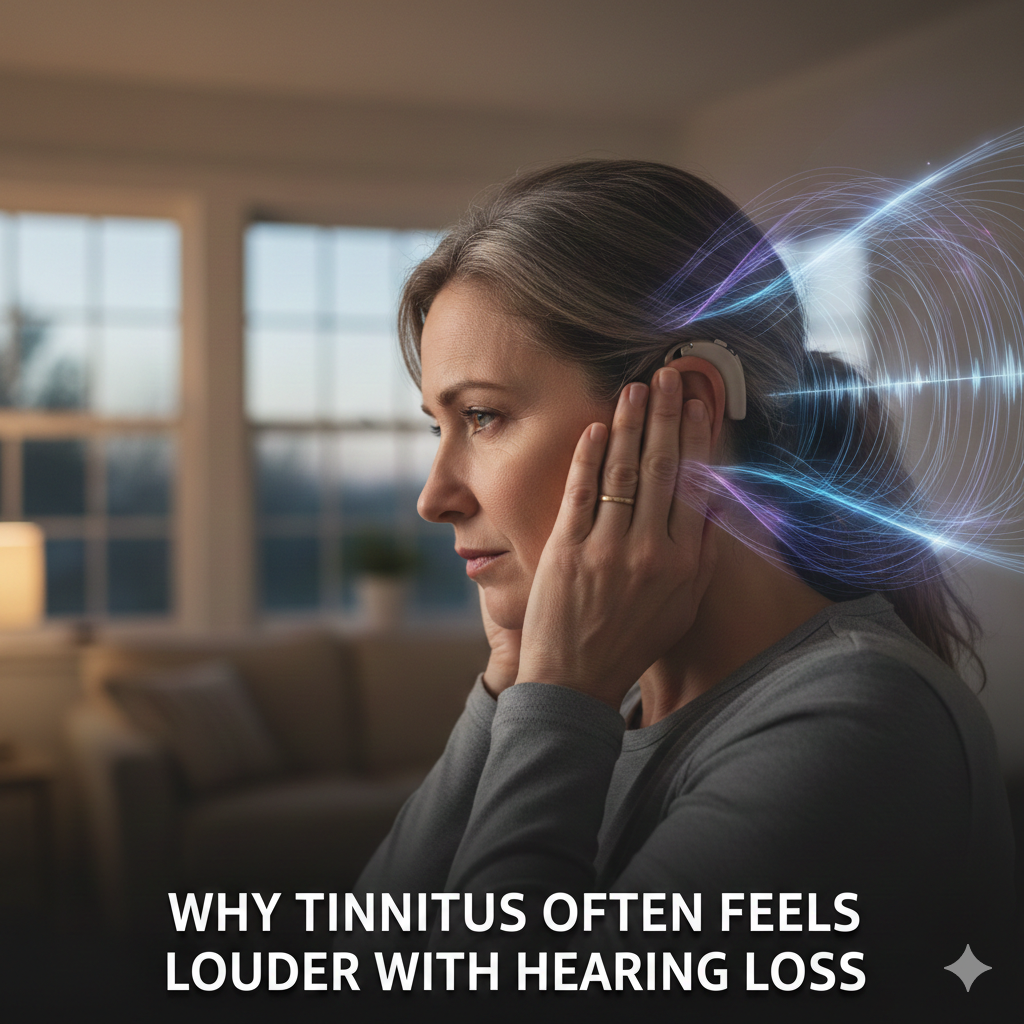
When hearing fades, the brain receives less sound input. To compensate, it increases internal “gain”—which can amplify internal noise signals perceived as ringing, buzzing, or hissing.
Think of it like turning up a radio when the signal is weak. The static becomes louder too.
Hearing aids help by:
Restoring missing ambient sound
Reducing the brain’s need to “fill in gaps”
Shifting attention away from tinnitus
When Hearing Aids Help Tinnitus the Most
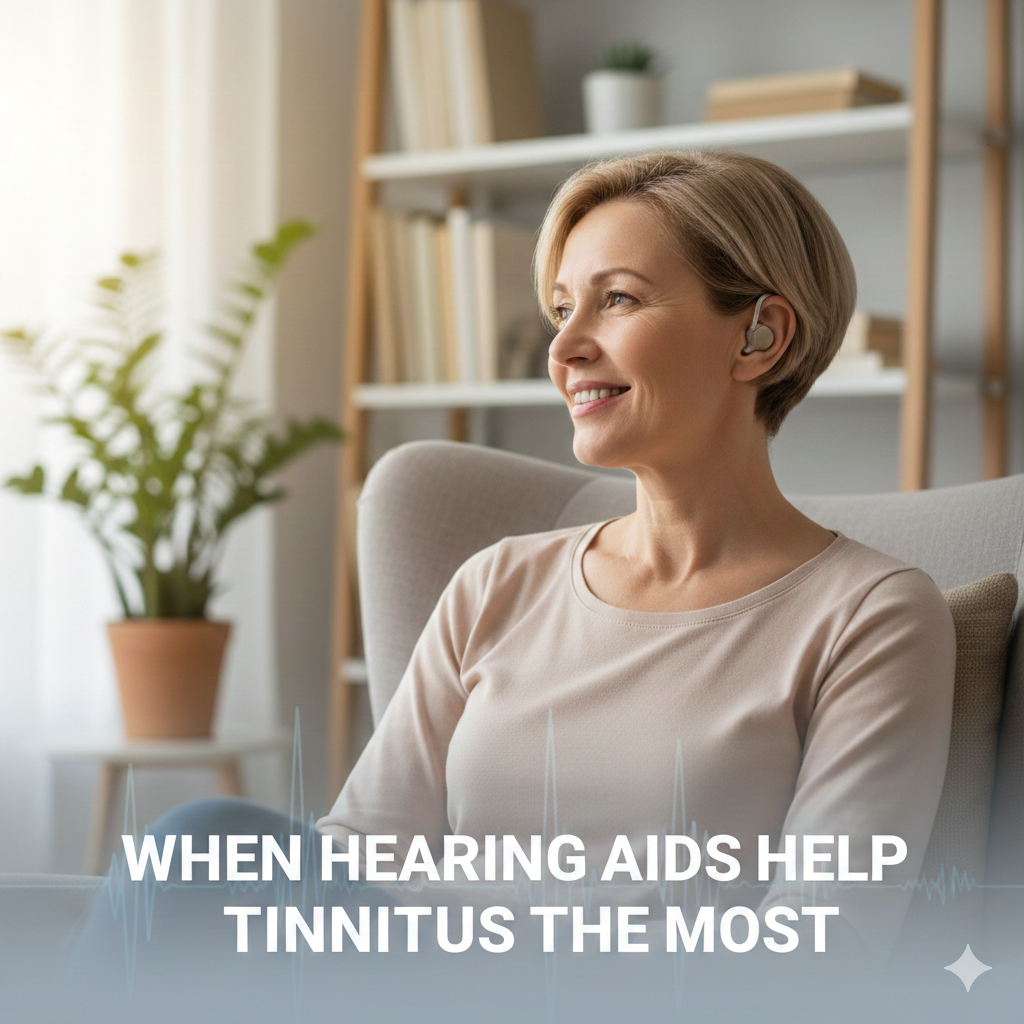
Situations where improvement is common
Mild to moderate hearing loss
Tinnitus that fluctuates with environment
Ringing that feels worse in quiet rooms
Consistent daily hearing aid use (8+ hours)
Situations where results are limited
Severe tinnitus with normal hearing
Tinnitus linked to jaw issues or medication
Inconsistent or short wear time
[Expert Warning]
If tinnitus occurs without hearing loss, hearing aids alone may provide little benefit. Proper evaluation matters.
Hearing Aids vs Tinnitus Masking: Not the Same Thing
Many devices advertise “tinnitus masking,” but this term is often misunderstood.
Hearing aids (indirect relief)
Reduce contrast between silence and tinnitus
Encourage brain habituation over time
Masking sounds (direct relief)
Add gentle noise (white noise, ocean, rain)
Temporarily cover tinnitus perception
Key point: Masking offers short-term comfort. Hearing aids support long-term adaptation.
Common Mistakes (and How to Fix Them)
Mistake #1: Expecting tinnitus to disappear
Fix: Aim for reduced awareness, not silence.
Mistake #2: Using masking too loudly
Fix: Mask just below tinnitus level to promote habituation.
Mistake #3: Giving up in week one
Fix: Track progress over 30–60 days, not days.
[Pro-Tip]
Many users notice tinnitus feels worse in the first week. This is often temporary and linked to increased sound awareness—not damage.
Information Gain: The Stress–Tinnitus Loop Most Articles Ignore
Top SERP pages rarely explain how stress and attention amplify tinnitus.
Tinnitus intensity isn’t just about sound—it’s about emotional response. Anxiety increases monitoring. Monitoring increases perceived loudness. Loudness increases anxiety.
What helps break the loop:
Consistent sound exposure (hearing aids on)
Neutral sound enrichment at night
Reducing “checking behavior” (“Is it still there?”)
This is why two people with identical hearing aids can have opposite outcomes.
Unique Section — Myth vs Reality
Myth: Tinnitus masking treats the cause
Reality: It manages perception, not origin
Myth: Stronger hearing aids work better
Reality: Proper tuning beats power
Myth: Silence is good for tinnitus
Reality: Silence often makes tinnitus feel louder
Real-World Scenario: Office vs Home
At home (quiet): tinnitus feels dominant.
At work (ambient noise): tinnitus fades into background.
What works: Wearing hearing aids before tinnitus spikes—preventive, not reactive use.
Practical Tips From Real Use
From real user patterns:
Morning wear reduces day-long awareness
Outdoor walks with aids on calm the brain
Night sound enrichment improves sleep quality
[Money-Saving Recommendation]
Before buying “tinnitus programs,” test standard amplification + free sound apps. Many users get similar relief without upgrades.
Comparison Table: Tinnitus Support Options
| Approach | Short-Term Relief | Long-Term Benefit | Best For |
| Hearing aids | Moderate | High | Tinnitus + hearing loss |
| Masking sounds | High | Low | Sleep, acute spikes |
| Silence | None | None | Rare cases only |
| Counseling | Low | High | Stress-driven tinnitus |
Internal Linking (Contextual)
“how amplification changes perception” → How Hearing Aids Work
“masking features explained” → Do Hearing Aids Have Tinnitus Masking Sounds?
“early hearing loss decisions” → Hearing Aids for Mild Hearing Loss
Watch & Learn (YouTube — contextual)
“Why hearing loss makes tinnitus louder”
“Tinnitus masking vs habituation explained”
(Embed after the masking section for dwell time.)
Image & Infographic Suggestions (1200×628 px)
Infographic: “Silence vs Sound Enrichment Effect on Tinnitus”
Alt: tinnitus perception with and without hearing aids
Diagram: “Brain Gain & Tinnitus Loop”
Alt: stress tinnitus feedback loop
Visual: “Masking vs Habituation Timeline”
Alt: tinnitus relief methods comparison
FAQs
Do hearing aids cure tinnitus?
No. They help manage perception, not eliminate the condition.
Can tinnitus get worse with hearing aids?
Temporarily, yes—usually during early adjustment.
Are tinnitus masking sounds safe?
Yes, when used at low levels.
Do OTC hearing aids help tinnitus?
They can, if hearing loss is present and devices are worn consistently.
Should I wear hearing aids all day?
Yes—consistent wear improves outcomes.
Conclusion
Hearing aids help tinnitus by changing how the brain processes sound—not by silencing it. When paired with realistic expectations, consistent use, and stress awareness, many people experience meaningful relief. The goal isn’t silence; it’s control.
Internal link
How Hearing Aids Work: Simple, Real-Life Explanation
External link
Hearing Aids / Masking Devices | American Tinnitus Association