Introduction — Why this matters now
Jabra Enhance hearing aids review articles often rank high online, but rankings don’t tell you how these devices behave after the first week—when real life actually begins. That’s where many reviews stop, right before comfort fatigue, app quirks, and daily wear habits start to matter.
Jabra brings serious audio credibility from its consumer electronics background, and its OTC hearing aids promise clear speech, sleek design, and app-based control without clinic visits. However, strong branding doesn’t automatically mean the right fit for every ear or lifestyle. This review focuses on long-term daily wear, adjustment reality, app stability, and the small friction points that only show up after hours of use—not spec sheets or marketing claims.
The 40-Second Answer
Jabra Enhance hearing aids are a strong OTC option for adults with mild to moderate hearing loss who want clean speech, comfortable open-fit wear, and app-based control. They are less ideal for users who dislike smartphone tuning, need hands-on clinical support, or have complex hearing profiles.
What Jabra Enhance Is (and Isn’t)
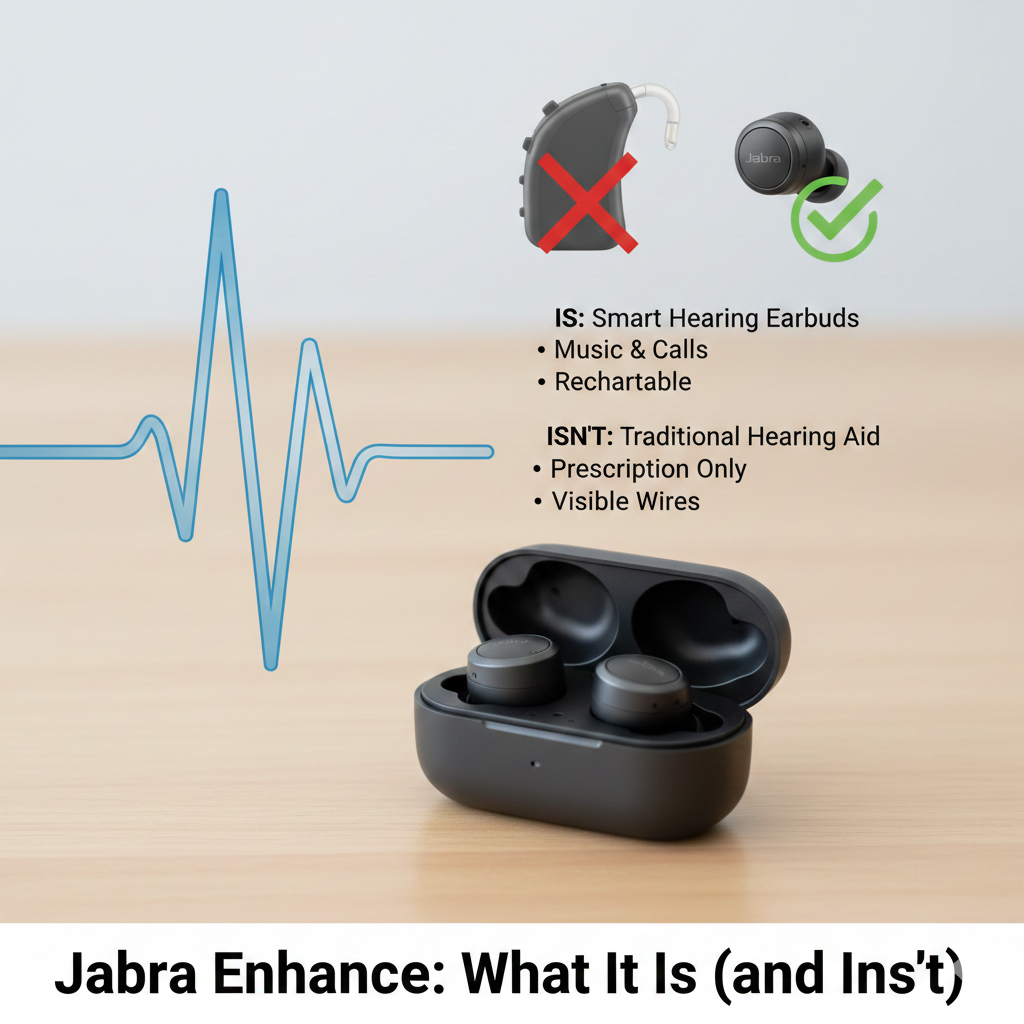
Jabra Enhance devices are OTC, self-fitting hearing aids designed for independent users.
What they are
App-guided self-fitting
Rechargeable models with slim profiles
Speech-focused processing
Remote support options (plan-dependent)
What they aren’t
Prescription-fitted
Designed for severe or asymmetric loss
“Set it and forget it” for non-tech users
[Expert Warning]
If you’re uncomfortable adjusting sound in an app, Jabra Enhance may feel frustrating—even if the hardware is good.
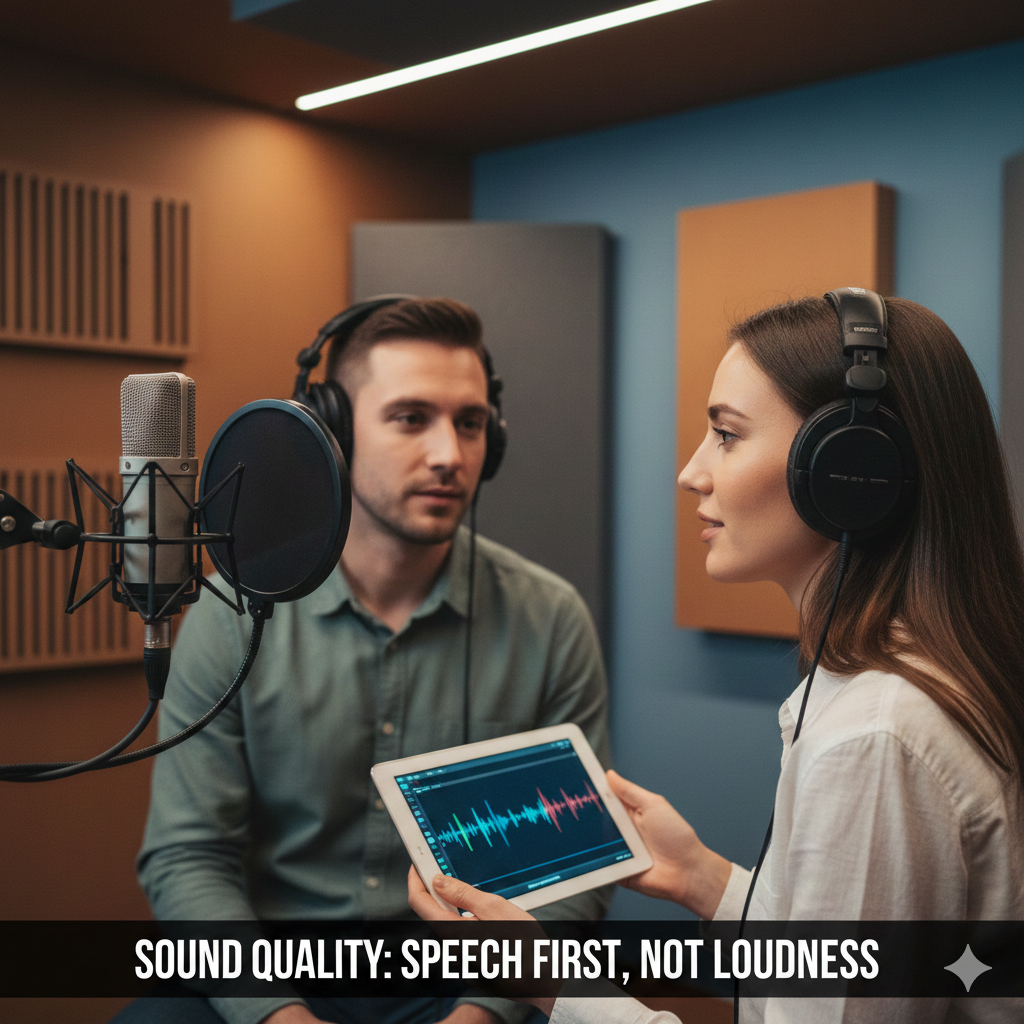
Sound Quality: Speech First, Not Loudness
What sounds good
Voices in quiet rooms
One-on-one conversations
TV dialogue at lower volumes
Where limits appear
Busy restaurants
Competing speakers
Sudden loud noise transitions
Jabra’s tuning prioritizes speech intelligibility over aggressive noise suppression, which many users find more natural—even if background noise isn’t fully muted.
Comfort & Fit After a Full Day
Jabra Enhance uses open-fit domes, which reduce the “plugged ear” sensation.
Real-world comfort notes
Light behind-the-ear weight
Minimal pressure in the canal
Comfortable for glasses wearers
Some users report minor ear fatigue after 8–10 hours, especially during the first two weeks—typical for new hearing aid users.
[Pro-Tip]
Comfort improves noticeably after the brain adapts; don’t judge fit in the first few days alone.
The App Experience: Powerful but Demanding
The Jabra Enhance app is central to the experience.
What the app does well
Guided hearing test
Fine control over sound balance
Preset environments
Remote support access (where included)
Where friction appears
Occasional reconnect delays
App updates affecting saved settings
Learning curve for first-time users
[Expert Warning]
App stability matters more than Bluetooth version numbers. Keep auto-updates enabled—but avoid major OS updates mid-trial.
Common Mistakes Buyers Make (and Fixes)
Mistake #1: Over-tuning on day one
Fix: Use default settings for 5–7 days.
Mistake #2: Expecting silence in noise
Fix: Focus on clarity, not quiet.
Mistake #3: Wearing only “when needed”
Fix: Daily wear speeds adaptation.
Information Gain: Why Jabra Feels “Cleaner” Than Some Competitors
Many SERP reviews don’t explain why Jabra’s sound is often described as clean.
From real usage patterns:
Conservative amplification avoids distortion
Speech emphasis avoids harshness
Fewer aggressive noise tricks reduce fatigue
The trade-off: less dramatic noise suppression, but more natural listening over long sessions.
Unique Section — Practical Insight From Experience
Users switching from ultra-cheap amplifiers often say:
“It doesn’t blow me away—but I stop thinking about it.”
That “invisible improvement” is often the real success metric.
Battery Life & Charging Reality
| Aspect | Real-World Outcome |
| Daily use | Full day on one charge |
| Streaming | Reduces battery faster |
| Charging case | Convenient, reliable |
| Downtime | Minimal with routine charging |
[Money-Saving Recommendation]
If you stream calls all day, keep a charger at work—battery drain is normal, not a defect.
Jabra Enhance vs Typical OTC Competitors (Table)
| Feature | Jabra Enhance | Typical OTC |
| Speech clarity | High | Variable |
| App control | Advanced | Basic–Moderate |
| Comfort | Very good | Mixed |
| Noise handling | Moderate | Variable |
| Ease for beginners | Moderate | Mixed |
Who Jabra Enhance Is Best For
Mild to moderate hearing loss
Tech-comfortable users
People prioritizing clean speech
Users okay with app-based tuning
Who Should Skip
Severe or uneven hearing loss
Users who want in-person fitting
Those uncomfortable with smartphones
Internal Linking
“who OTC hearing aids are best for” → Best OTC Hearing Aids
“first-time user expectations” → Are OTC Hearing Aids Worth It?
“Bluetooth reliability differences” → Bluetooth Hearing Aids: iPhone vs Android
Watch &
“Jabra Enhance hearing aids real-world test”
“OTC hearing aid self-fitting walkthrough”
(Embed after the app section.)
Image & Infographic Suggestions (1200×628 px)
Infographic: “Jabra Enhance: Strengths vs Trade-Offs”
Alt: Jabra Enhance hearing aids review summary
Diagram: “App-Based Self-Fitting Flow”
Alt: Jabra Enhance self fitting app
Visual: “Listening Fatigue Over 8 Hours”
Alt: Jabra Enhance comfort test
FAQs
Is Jabra Enhance good for first-time users?
Yes, if you’re comfortable using apps and adjusting settings.
Does Jabra Enhance help tinnitus?
It can reduce awareness when hearing loss is present.
Can I return Jabra Enhance hearing aids?
Most plans include a trial—check terms before buying.
Do they work better with iPhone or Android?
Generally smoother with iPhone, but Android compatibility is improving.
Are they worth the price?
For the right user profile, yes—especially compared to cheaper alternatives.
Conclusion
Jabra Enhance hearing aids succeed by doing the basics exceptionally well: clear speech, comfortable fit, and flexible control. They aren’t magic, and they aren’t for everyone—but for tech-comfortable users with mild to moderate hearing loss, they’re one of the more reliable OTC choices available today.
Internal link
Best Affordable Hearing Aids That Don’t Feel Cheap
External link