Introduction — Why this matters now
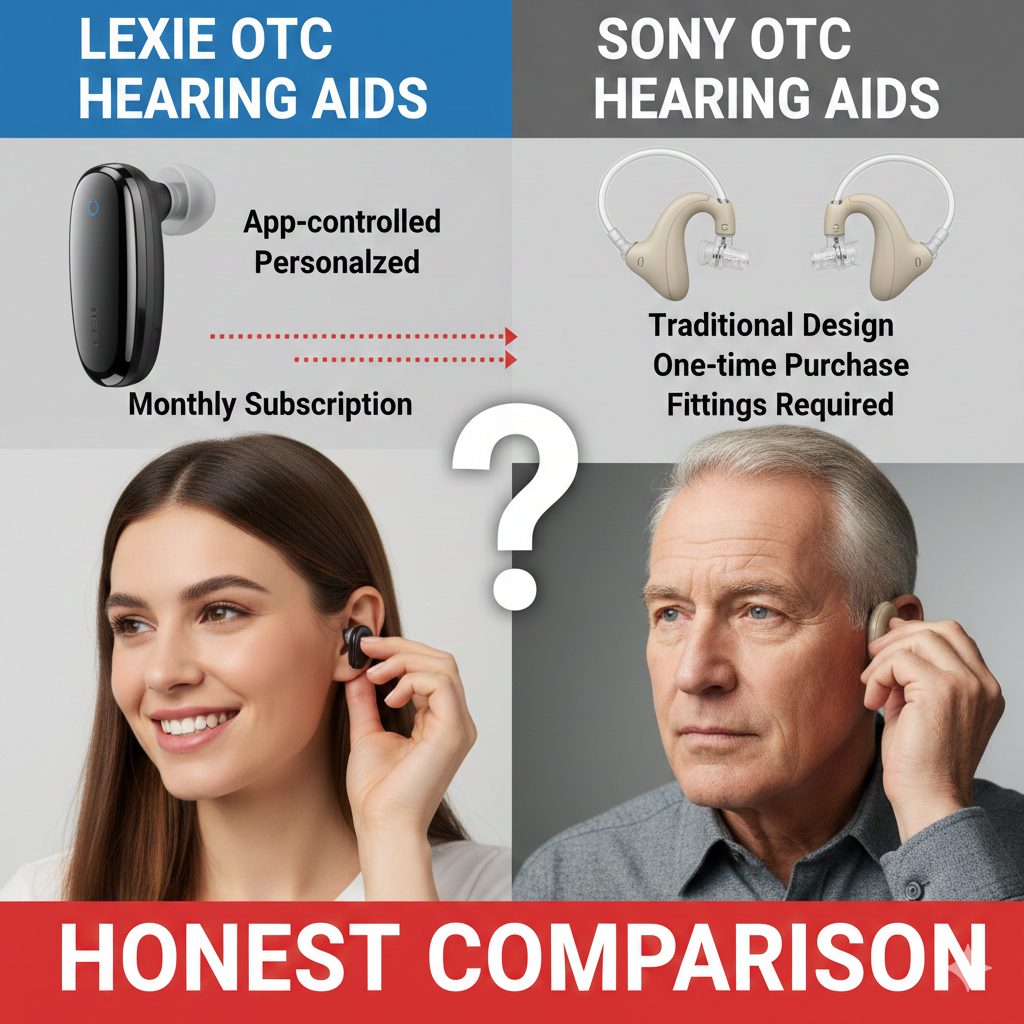
Lexie vs Sony OTC hearing aids: Which one fits your lifestyle? Both Lexie and Sony sell legitimate over-the-counter hearing aids, but they cater to very different types of users—a distinction often missed in rankings that focus mainly on specs.
Lexie emphasizes accessibility and guided support, making it ideal for users who want step-by-step setup and ongoing assistance. Sony, on the other hand, leans on minimalist hardware and its long-standing audio expertise, appealing to those comfortable managing devices through apps and who value sleek design.
On paper, both brands promise clear speech and easy setup. In reality, the choice comes down to how much guidance you want, your comfort level with apps, and your patience during the initial setup. This comparison goes beyond brand names to highlight where each excels, where each can frustrate, and which is likely to fit seamlessly into your daily routine—not just your hearing test results
The 40-Second Answer
Lexie OTC hearing aids suit users who want guided setup and ongoing support, while Sony OTC hearing aids fit tech-comfortable users who prefer minimalist hardware and fewer hand-holding steps. Sound quality is solid on both; ease of use is the real divider.
Brand Philosophy: Support vs Simplicity

Lexie’s approach
Guided self-fitting
Educational prompts and coaching
Emphasis on accessibility and clarity
Support-first mindset
Sony’s approach
Hardware-led design
Minimalist controls
Less guidance, fewer prompts
Audio purity over instruction
[Expert Warning]
Neither approach is “better” universally—the wrong fit creates frustration even if sound quality is good.
Setup Experience: Where Most Buyers Decide

Lexie setup
Step-by-step app guidance
Clear instructions and explanations
Slower but confidence-building
Sony setup
Faster initial pairing
Fewer prompts
Assumes comfort with trial-and-error
Real outcome:
Lexie feels easier for beginners. Sony feels faster for experienced tech users.
Sound Quality in Daily Use
Speech clarity
Both brands prioritize speech, but with different tuning styles.
Lexie: Slightly warmer, forgiving sound
Sony: Cleaner, sharper audio edges
Background noise
Neither eliminates noise entirely (no OTC does), but:
Lexie smooths noise gradually
Sony preserves detail, which some users interpret as “noisier”
[Pro-Tip]
If sharper sound feels tiring, Lexie’s softer tuning may be easier long-term.
Comfort & Wearability Over Time
Lexie
Lightweight behind-the-ear feel
Multiple dome options
Comfortable for long sessions
Sony
Compact, discreet design
Some users report pressure with long wear
Fit matters more with ear shape
Comfort differences usually appear after 4–6 hours, not in the first 10 minutes.
Common Buyer Mistakes (and How to Avoid Them)
Mistake #1: Choosing by brand reputation alone
Fix: Choose by support style, not brand name.
Mistake #2: Underestimating setup learning curve
Fix: Match device complexity to your tech comfort.
Mistake #3: Expecting instant perfection
Fix: Judge performance after 2–3 weeks, not day one.
Information Gain: Setup Friction Predicts Satisfaction
Top SERP comparisons rarely mention setup friction—but it predicts returns better than sound quality.
From real usage patterns:
Users who feel lost during setup abandon devices early
Guided onboarding increases retention
Minimalist designs reward confident users—but punish beginners
This is why Lexie has fewer “gave up” stories among first-time buyers.
Unique Section — Real-World Scenario Comparison
Scenario 1: First-Time User, Mild Loss
Better fit: Lexie
Why: Guidance reduces anxiety and over-adjustment
Scenario 2: Tech-Savvy User, Prior Experience
Better fit: Sony
Why: Faster setup, cleaner sound preference
Scenario 3: Older User With Vision Issues
Better fit: Lexie
Why: Clear prompts and support reduce friction
Feature Comparison Table
| Feature | Lexie OTC | Sony OTC |
| Setup guidance | High | Low–Moderate |
| Sound profile | Warm, forgiving | Clean, sharp |
| App complexity | Beginner-friendly | Minimal |
| Comfort over long wear | Very good | Ear-dependent |
| Best for | New users | Tech-comfortable users |
[Money-Saving Recommendation]
Choose the device you’ll actually keep wearing. Returns cost time—even if trials are free.
Practical Tips From Experience
From users who tested both:
Don’t change presets daily—give each 3–4 days
Test in noisy places early
Comfort matters more than invisibility
Track fatigue, not loudness
Internal Linking
“who OTC hearing aids are best for” → Best OTC Hearing Aids
“first-time user expectations” → Are OTC Hearing Aids Worth It?
“clean speech vs fatigue trade-offs” → Jabra Enhance Hearing Aids Review
Watch & Learn (YouTube — contextual)
“Lexie OTC hearing aids setup walkthrough”
“Sony OTC hearing aids real-world test”
(Embed after the setup section.)
Image & Infographic Suggestions
Infographic: “Lexie vs Sony: Support vs Simplicity”
Alt: Lexie vs Sony OTC hearing aids comparison
Diagram: “Guided Setup vs Minimal Setup Flow”
Alt: OTC hearing aid setup differences
Visual: “Listening Comfort After 6 Hours”
Alt: Lexie vs Sony comfort comparison
FAQs
Which is better: Lexie or Sony OTC hearing aids?
It depends on your need for guidance versus simplicity.
Are Lexie hearing aids good for beginners?
Yes—guided setup makes them beginner-friendly.
Do Sony OTC hearing aids sound better?
They sound cleaner to some users, but preferences vary.
Can I return both brands if they don’t work?
Most sellers offer trial periods—always confirm before buying.
Do either work for severe hearing loss?
No—both are designed for mild to moderate loss only.
Conclusion
Lexie and Sony both deliver solid OTC hearing aids—but they solve different problems. Lexie reduces uncertainty and learning stress. Sony rewards confidence and simplicity. Choosing the right one isn’t about specs—it’s about how much guidance you want between opening the box and feeling comfortable all
Internal link
External link
Top OTC Hearing Aids for 2025: Brands, Models, Features and Prices Reviewed